


Esophageal cancer is a form of cancer affecting the esophagus. It is a lengthy, hollow tube connecting the throat to the stomach, which helps in moving the food down to the stomach for digestion.
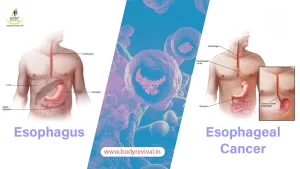
Typically, esophageal cancer originates in the cells lining the inner walls of the esophagus. It can develop anywhere along its length. This type of cancer is more commonly diagnosed in men than in women. It is also known as food pipe cancer. The type and stage of esophageal cancer play an important role in determining the appropriate esophageal cancer treatment for an individual.
Globally, esophageal cancer ranks as the sixth leading cause of cancer-related deaths. Incidence rates vary significantly across different regions, with certain areas showing higher rates possibly linked to factors such as tobacco and alcohol consumption, specific dietary patterns, and obesity. A very high incidence of esophageal cancers has been reported in North-East region of India.
Symptoms of Esophageal cancer
It’s important to remember that the symptoms may be similar to other common diseases. Esophageal cancer shows signs and symptoms like:
– Difficulty in swallowing anything
– Losing weight without trying
– Feeling chest pain, pressure, or burning
– Having more trouble with indigestion or heartburn
– Coughing or having a hoarse voice
If these symptoms continue or become more noticeable, seeking medical advice is important. Early evaluation can help identify the underlying cause and, when necessary, support timely diagnosis and consideration of appropriate esophageal cancer treatment.
When to see a doctor
If you experience persistent swallowing difficulties, unexplained weight loss, ongoing heartburn, chest discomfort, or other unusual symptoms, consult a qualified healthcare professional.
People diagnosed with Barrett’s esophagus may have a higher risk of developing esophageal cancer, particularly when associated with long-term acid reflux. If you have this condition, discuss appropriate monitoring and warning signs with your doctor.
Being informed about esophageal cancer, recognizing potential symptoms, and seeking timely medical evaluation can support earlier diagnosis and help healthcare professionals determine suitable esophageal cancer treatment and care options.

Causes
Scientists are not exactly sure as to the causes of Esophageal cancer.
Esophageal cancer happens when cells in the esophagus start to change their DNA. These changes cause the cells to grow and multiply uncontrollably. The abnormal cells build up to form a tumour in the esophagus, which can grow into nearby tissues and spread to other parts of the body. Extreme acidity and acid reflux may also be a point of concern. Other factors can be:
- Achalasia – a condition where the muscle at the bottom of the esophagus doesn’t relax properly
- Reflux disorder
- Inherited genetic mutations
Risk factors of Esophageal cancer
It’s believed that ongoing irritation of your esophagus might lead to the changes that cause cancer. Things that can irritate the cells of your esophagus and increase your risk of esophageal cancer include:
– Having gastro-esophageal reflux disease (GORD)
– Smoking
– Having precancerous changes in the cells of the esophagus (Barrett’s esophagus)
– Being overweight
– Drinking alcohol
– Having bile reflux
– Difficulty swallowing due to a tight esophageal sphincter (achalasia)
– Regularly drinking very hot drinks
– Not eating enough fruits and vegetables
– Undergoing radiation treatment to the chest or upper abdomen
Types of Esophageal cancer
Cancer is grouped based on the kinds of cells involved. The type of esophageal cancer you have affects the treatment options you might have. There are two main types:
- Adenocarcinoma esophageal cancer: This type starts in the cells of glands that produce mucus in the esophagus. It’s mostly found in the lower part of the esophagus.
- Squamous cell carcinoma: Squamous cells are flat and thin, lining the surface of the esophagus. This type usually appears in the upper or middle part of the esophagus. It is the most common type of esophageal cancer worldwide.
There are also some rarer types of esophageal cancer, including small-cell carcinoma, sarcoma, lymphoma, melanoma, and choriocarcinoma.

Treatment of Esophageal Cancer
The choice of esophageal cancer treatment depends on several factors, including the stage and type of cancer, the location of the tumor, the overall health of the patient, and the extent to which the cancer has spread. Based on the individual diagnosis, doctors may recommend one treatment or a combination of different approaches. Common treatment options include surgery, chemotherapy, radiation therapy, and immunotherapy.
- Surgery – Surgery to remove cancer can be used along with other treatments. The surgeon would consider the level of cancer spread before the surgery. It might include the removal of the tumor alone or a portion of the esophagus along with some nearby tissue or, in some cases, a part of the stomach.
- Chemotherapy – This treatment uses drugs to stop the growth of cancer cells. It does this either by killing the cancer cells or by preventing their further division. It can be done either intravenously or orally. The drugs enter the bloodstream and reach the cancer cells across the body.
- Radiation Therapy – Radiation therapy uses high-energy radiation like X-rays and protons to kill the cancer cells or halt their growth. Doctors commonly use it in combination with chemotherapy. However, they sometimes use radiation therapy to relieve complications in advanced cancer.
- Immunotherapy – It uses the body’s immune system to fight off cancer cells. Substances made in labs or by the body itself are used to boost and restore the body’s immune system and as a defense against cancer cells.
The most appropriate esophageal cancer treatment should be determined after a detailed evaluation by qualified cancer specialists. Treatment plans can vary significantly from one patient to another based on the diagnosis and overall health.