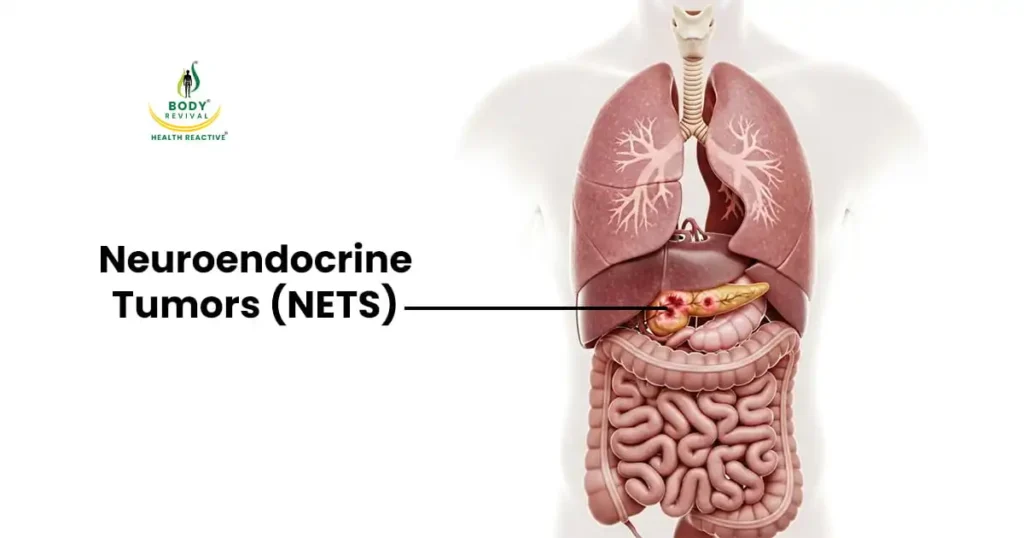
Neuroendocrine tumors, also known as NETS, have been recognized as rare cancers that originate in the body’s neuroendocrine cells, which are distributed in various parts of the body. These cells have functions characteristic of nerve cells and hormone-secreting cells. They regulate the body’s various processes, including digestion, metabolism, and hormone regulation.
It is crucial to understand what NETs entail, right from the symptoms to the diagnosis and treatment options. Here’s all the information that you need.
What Are Neuroendocrine Tumors(NETS)?
Neuroendocrine tumors occur as a result of abnormal growth of neuroendocrine cells, which develop into a tumor. Neuroendocrine tumors are most commonly found in the following parts of the body

- Gastrointestinal tract (appendix, small intestine, rectum)
- Pancreas
- Lungs
- Other organs including the adrenal glands.
NETs can be quite different, ranging from slow growth with little symptom expression over several years to aggressive growth and spread to other tissue. Some NETs secrete excessive amounts of hormones that cause distinct systemic symptoms, and others are “silent.”
Symptoms of NETs
Identifying Symptoms With many symptoms similar to other diseases, early diagnosis of NET can be difficult. Symptoms depend on the site of the tumor and whether it produces hormones. The presenting symptoms are as follows:
General Symptoms
- Unexplained Fatigue
- Weight loss
- Abdominal pain or lump
- Nausea or Diarrhea
Symptoms of Functional (Hormone-Secreting) Tumors
Functional NETs can cause hormonal symptoms such as:
- Skin Flushing
- Diarrhea
- Heart palpitations
- Alteration in thirst and appetite
Since these are common symptoms associated with many other diseases, tests are usually conducted to diagnose what is causing these symptoms.
How Are Neuroendocrine Tumors Diagnosed?
Diagnosis of NETs requires a combination of clinical, laboratory, imaging, and pathological assessments.
1. Clinical Evaluation
Your healthcare provider will evaluate your symptoms and risk factors and perform a physical exam. In addition, your family history may be evaluated because certain genetic syndromes, such as Multiple Endocrine Neoplasia Syndrome, may predispose you.
2. Laboratory Tests
Doctors can also make use of blood and urine tests in estimating various compounds related to NETs, such as hormone levels or tumor markers. For instance:
- Chromogranin A (CgA) – high levels could indicate NET activity
- 24-hour urine 5-HIAA – used primarily in hormonal NETs such as carcinoid syndrome
3. Imaging Techniques
Imaging is performed to identify the tumor and extend of tumor dissemination. General Imaging studies includes the following:
- Ultrasound
- Computed Tomography scan(CT-Scan)
- MRI
- Specific tracers’ PET scans, such as somatostatin receptor imaging
Advanced imaging can illustrate not only the tumor but also its metabolic activity and receptor status.
4. Biopsy and Pathology
A biopsy-to remove tissue of the tumor-is needed to confirm NETs. After it has been collected, pathologists will look at the cells under a microscope to find out:
- Tumor type
- The cell differentiation, which is described in terms of well or poorly differentiated
- Grade-how quickly the cells are dividing; this is often measured by the Ki-67 index
Grade and differentiation have a heavy influence on prognosis and treatment strategy.
Staging and Grading of NETs
After diagnosis, NETs undergo staging (extent of spread) and grading (aggressiveness):

- Grade 1 — slow growing
- Grade 2 — intermediate
- Grade 3 — fast growing
It is further divided into localized, regional, and metastatic; this is again crucial in staging for the effective therapy planning of cancer.
Treatment Options for NETs
Treatment regimens are tailored depending on the tumor type, location in the body, hormone levels, grade, and stage of the cancer. Current management involves:
1. Surgery
Surgery for the removal of the main tumor and the affected area can be the first line of treatment if it can be done. The earlier the surgery, the better the chances for a cure.
2. Medications
- Somatostatin analogs (such as octreotide) are used to help manage hormone symptoms and may also slow the growth
- Targeted therapies target specific molecular characteristics of NET cells.
- Chemotherapy could be used for more aggressive or advanced cancers.
3. Radiation Therapy
“Radiation can hold tumor growth in check, especially in cases where surgery is not feasible.” One of the most advanced modalities in this category has emerged as “Peptide Receptor Radionuclide Therapy.” This delivers the radiation right to the NET cells. Lutetium-177 dotatate has proven its efficacy in treating metastatic NETs
4. Immunotherapy
For certain aggressive NETs, immune-based therapies can help the body’s immune system attack the cancer cells.
At Body Revival, patients are guided through evidence-based treatment pathways, with a strong focus on personalized care, integrative oncology support, and coordination with oncologists to explore advanced therapies when appropriate—always prioritizing safety, suitability, and overall quality of life.
Living with Neuroendocrine Tumors
Having a NET diagnosis can be frightening, but many people live long lives if their condition is carefully managed:
- Regular follow-up tests enable the monitoring of progress of the disease.
- Supportive care, such as nutrition and symptom management, does improve quality of life.
- There are support groups and specialty clinics provided by NET that are aimed at giving both emotional support and medical advice.
Early intervention and individualized planning are crucial for optimum success.
Conclusion
Neuroendocrine tumors also have a number of distinct characteristic factors that make their diagnosis and treatment a challenge. But based on lab markers, advanced imaging studies, careful biopsy analysis, and personalized treatment approaches such as surgery, medication, or radioactive treatments, it is possible to effectively control their disease.
At Body Revival, we believe in equipping patients not only to manage their NETs but to have healthier, better-informed lives.