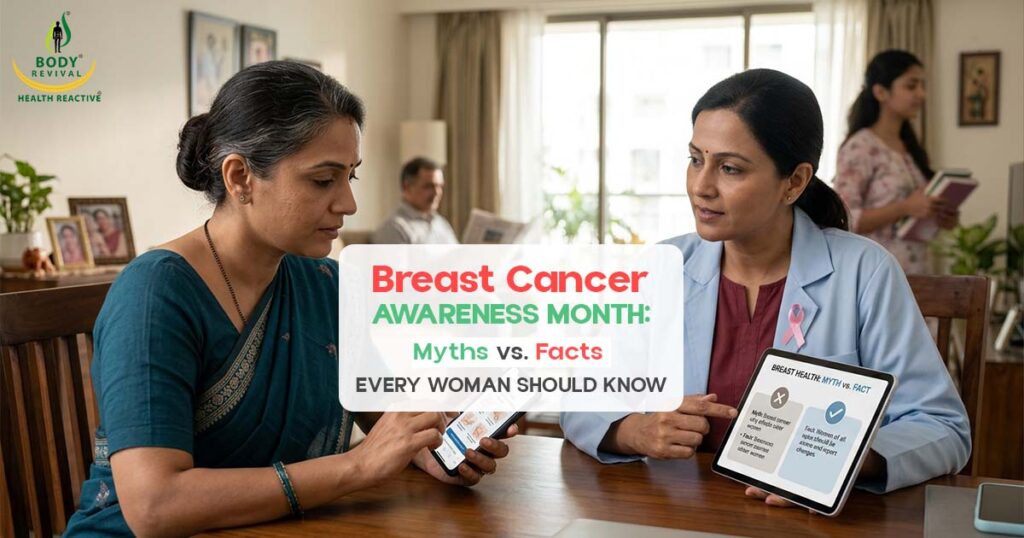
October is observed globally as Breast Cancer Awareness Month, an opportunity to improve awareness, encourage early detection, promote timely diagnosis, and remind people that every breast cancer journey is different.
But awareness is not just about knowing that breast cancer exists.
It is also about knowing what is true, what is a misconception, and when a change in your breast should be checked by a healthcare professional.
There are many commonly repeated claims about breast cancer—from deodorants and bras to family history, breast lumps, mammograms, and lifestyle. Some are based on outdated information, while others oversimplify a complicated disease.
In this guide, we separate some of the most common cancer myths from evidence-based facts.
Important: Most breast changes are not cancer, but any new or unusual breast change should be evaluated by a qualified healthcare professional. Early breast cancer may not cause symptoms, which is why appropriate screening is important.
Why Is Breast Cancer Awareness Month Important?
Breast cancer is the most commonly diagnosed cancer among women globally. World Health Organization estimates that around 2.3 million women were diagnosed with breast cancer in 2022, with approximately 670,000 deaths that year.
Awareness can help people recognize potential symptoms, understand their individual risk, discuss screening with healthcare professionals, and seek medical evaluation without unnecessary delay.
However, awareness should not create fear.
A breast lump does not automatically mean cancer, and having no family history does not mean a person has no risk. The risk is influenced by multiple factors, including age, genetics, family history, reproductive factors, certain lifestyle factors, and previous medical exposures.
Breast Cancer Myths vs. Facts
Myth 1: Every Breast Lump Means Breast Cancer
Fact: Most breast changes are not necessarily cancer—but they should be evaluated if they are unusual or persistent.
Breast lumps and other changes can occur for many reasons, including benign breast conditions.
However, a new lump, thickening, change in breast size or shape, nipple discharge, nipple changes, skin dimpling, redness, swelling, or other unusual changes should not simply be ignored.
The National Cancer Institute notes that most breast changes are not cancer, but recommends speaking with a healthcare professional about unusual changes.
What to remember:
Don’t panic when you notice a breast change—but don’t ignore it either.
Myth 2: Breast Cancer Always Causes a Lump
Fact: Breast cancer does not always present as a noticeable lump.
Some may cause changes in the skin, nipple, breast shape, or other areas rather than a clearly felt lump.
Possible signs can include:
- A new lump in the breast or underarm
- Thickening or firmness
- Change in breast size or shape
- Nipple inversion or a change in nipple direction
- Nipple discharge that is not breast milk
- Skin dimpling or puckering
- Redness or swelling
- Scaly or swollen skin around the nipple or breast
Early breast cancer can also have no symptoms, which is one reason screening can be important.
Myth 3: If There Is No Family History, You Cannot Get Breast Cancer
Fact: Many people diagnosed with breast cancer do not have a known family history.
Family history can increase the risk, particularly when a close relative has had the disease. Certain inherited genetic changes, including BRCA1 and BRCA2, can also substantially increase risk.
But having no known family history does not mean someone is risk-free.
WHO reports that approximately 80% of breast cancers occur in women without specific risk factors other than sex and age.
The NCI also emphasizes that risk factors increase the likelihood of developing it but do not guarantee that someone will or will not develop the disease.
The takeaway:
Know your family history, but don’t use the absence of family history as a reason to ignore breast health.
Myth 4: Only Older Women Get Breast Cancer
Fact: Breast cancer risk generally increases with age, but it can occur in younger people too.
Age is an important risk factor, and most breast cancers occur later in life. However, younger women can also develop breast cancer.
The appropriate approach is not to assume that someone is “too young” to have breast cancer. A persistent or concerning breast change should be evaluated regardless of age.
Screening recommendations also depend on factors such as age and individual risk.
Myth 5: Wearing a Bra Causes Breast Cancer
Fact: There is no established evidence that wearing a bra causes breast cancer.
Claims that underwire bras or tight bras block lymphatic drainage and cause breast cancer are not supported by established evidence.
The risk is associated with a range of biological, genetic, reproductive, lifestyle, and environmental factors—not simply whether someone wears a particular type of bra.
The takeaway:
Choose a bra for comfort and fit, but don’t consider bra use a proven cause of breast cancer.
Myth 6: Deodorants and Antiperspirants Cause Breast Cancer
Fact: Current evidence does not establish a link between deodorant or antiperspirant use and breast cancer.
This is one of the most widely circulated breast cancer myths.
Because deodorants and antiperspirants are used close to breast tissue, concerns have been raised about ingredients such as aluminum compounds and parabens.
However, the NCI reports that available scientific evidence does not establish that antiperspirants or deodorants cause brest cancer.
The takeaway:
There is currently no established causal link between ordinary deodorant/antiperspirant use and breast cancer.
Myth 7: Breast Cancer Is Always Painful
Fact: Breast cancer does not usually cause pain, especially in its early stages.
This can create confusion.
Some people believe that if a breast change doesn’t hurt, it cannot be serious. Others believe that breast pain automatically means cancer.
Neither assumption is reliable.
According to the NCI, brest cancer does not usually cause pain, and many non-cancerous conditions can cause breast pain or tenderness.
If persistent pain or another unusual breast change concerns you, discuss it with a healthcare professional.
Myth 8: A Normal Mammogram Means You Can Ignore Any New Breast Change
Fact: A new or unusual breast change should still be evaluated—even after a recent normal mammogram.
Mammography is an important breast cancer screening tool, but no screening test detects every cancer.
The NCI specifically advises people to tell their healthcare provider about an unusual breast change even if they recently had a normal mammogram.
This is particularly important because breast density can affect how easily cancer is detected on mammograms.
Remember:
A normal screening result is reassuring, but it does not mean future breast changes should be ignored.
Myth 9: Mammograms Are Only Necessary When You Have Symptoms
Fact: Screening mammography is designed to look for breast cancer before symptoms appear.
This is an important distinction:
Screening is performed in people who do not have symptoms.
Diagnostic testing is used when there is a symptom or abnormal finding that needs further evaluation.
Mammography can detect some breast cancers before they cause noticeable symptoms.
Screening recommendations vary depending on age, risk, medical history, and the guideline being followed.
For example, the U.S. Preventive Services Task Force (USPSTF) currently recommends biennial mammography for women aged 40–74 at average risk.
People at higher risk may need a different screening approach, so individual medical advice matters.
Myth 10: Breast Self-Examination Alone Can Rule Out Breast Cancer
Fact: Being familiar with how your breasts normally look and feel is useful, but self-examination alone is not a substitute for recommended screening.
The NCI states that breast self-exams are not an adequate brest cancer screening test on their own. However, being aware of your normal breast appearance and texture can help you notice changes that need medical attention.
The goal is not to encourage constant checking or anxiety.
It is to encourage breast awareness.
Myth 11: Breast Cancer Is Always Inherited
Fact: Genetics can play an important role, but breast cancer is not always inherited.
Certain inherited gene changes—including BRCA1, BRCA2, PALB2, TP53, PTEN, and others—can increase brest cancer risk.
Family history can also be important.
But many people diagnosed with brest cancer do not have an identifiable inherited genetic mutation or strong family history.
Your personal and family history can help your doctor determine whether genetic counselling or additional risk assessment may be appropriate.
Myth 12: Lifestyle Has Nothing to Do With Breast Cancer Risk
Fact: Some lifestyle factors are associated with breast cancer risk, although no lifestyle change can guarantee prevention.
Some established or recognized risk factors include:
- Alcohol consumption
- Physical inactivity
- Excess body weight, particularly after menopause
- Certain reproductive and hormonal factors
- Previous radiation exposure
- Family history and inherited genetic changes
The NCI identifies physical activity and maintaining a healthy weight as factors associated with lower breast cencer risk, while reducing or avoiding alcohol can also reduce risk.
But it is important not to turn risk reduction into blame.
A person can live a healthy lifestyle and still develop breast cancer.
Myth 13: If You Find a Breast Change, You Should Wait and See If It Goes Away
Fact: A new or concerning breast change deserves appropriate medical evaluation.
Some breast changes are temporary or benign. Others may require investigation.
Possible warning signs include:
- New breast lump
- Underarm lump
- Breast thickening
- Change in breast size or shape
- Nipple inversion
- Unusual nipple discharge
- Skin dimpling
- Persistent redness or swelling
- Changes around the nipple
These symptoms do not automatically mean cancer, but they should not be dismissed without appropriate evaluation.
Myth 14: Breast Cancer Awareness Is Only About Women
Fact: Breast cancer can also occur in men.
Breast cencer predominantly affects women, but men can develop breast cancer too.
WHO estimates that approximately 0.5–1% of breast cancers occur in men.
A breast lump or other unusual breast change in a man should also be evaluated by a healthcare professional.
What Are the Most Important Breast Cancer Risk Factors?
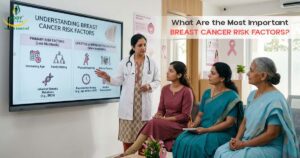
There is no single cause. Risk can be influenced by factors such as:
| Risk Factor | What It Means |
| Age | Risk generally increases as people get older. |
| Family history | Having close relatives with breast cancer can increase risk. |
| Inherited gene changes | Certain genetic variants can substantially increase risk. |
| Dense breasts | Dense breast tissue is associated with increased risk and can make mammograms harder to interpret. |
| Alcohol | Alcohol consumption is associated with increased breast cancer risk. |
| Physical inactivity | Lack of physical activity is associated with higher risk. |
| Excess body weight | Particularly after menopause, excess weight can increase risk. |
| Previous radiation exposure | Radiation to the chest at a young age can increase risk. |
| Reproductive factors | Certain reproductive patterns can affect lifetime hormone exposure. |
Having a risk factor does not mean you will develop brest cancer, and some people develop breast cencer without an obvious risk factor.
What Can You Do During Breast Cancer Awareness Month?
Awareness should lead to meaningful action.
1. Know Your Breast Health
Pay attention to changes in the appearance or feel of your breasts.
2. Understand Your Risk
Discuss your family and personal medical history with your healthcare provider.
3. Follow Appropriate Screening
Ask your doctor which screening approach is appropriate for your age and risk level.
4. Don’t Ignore Persistent Changes
A lump or other breast change does not automatically mean cancer—but it deserves appropriate evaluation.
5. Avoid Cancer Misinformation
Be careful with claims about “miracle cures,” guaranteed prevention, or products presented as substitutes for evidence-based cancer care.
6. Support Someone Going Through Treatment
Breast cancer affects families and caregivers too. Emotional support, practical help, and respectful communication can be meaningful throughout the treatment journey.
What Happens If a Breast Abnormality Is Found?
Finding an abnormality does not automatically mean a cancer diagnosis.
Depending on the situation, a healthcare professional may recommend additional evaluation, which can include:
- Diagnostic mammography
- Ultrasound
- MRI in selected situations
- Biopsy when indicated
A screening mammogram is not itself a cancer diagnosis. If an abnormality is found, further diagnostic testing may be needed to determine what it represents.
Breast Cancer Awareness Is About Facts, Not Fear
Breast Cancer Awareness Month should not be reduced to a pink ribbon.
Real awareness means understanding the disease, recognizing potential warning signs, knowing your risk, following appropriate screening recommendations, and seeking timely medical care.
It also means recognizing that every breast cencer diagnosis is different. Treatment and prognosis depend on factors such as cancer type, stage, tumor biology, overall health, and response to treatment.
For people undergoing cancer treatment, supportive care can also be an important part of the overall care journey. It can address symptoms, nutritional needs, emotional well-being, and quality of life alongside the cancer-directed treatment prescribed by the oncology team.
Where Does Supportive Care Fit Into Breast Cancer Care?

Breast cancer care is not limited to addressing the disease itself. Patients may also need support for the physical and emotional challenges that can accompany their cancer-care journey.
Supportive care may focus on areas such as:
- Fatigue and weakness
- Appetite and nutritional concerns
- Digestive well-being
- Sleep and emotional well-being
- Treatment-related discomfort
- Maintaining daily activities
- Overall quality of life
Ayurveda can be considered as part of this broader supportive-care approach.
Ayurvedic supportive care focuses on the individual’s overall well-being and may be used alongside the treatment plan recommended by the patient’s healthcare team. The objective is to complement the patient’s cancer-care journey with appropriate nutritional, lifestyle, and Ayurvedic support.
Body Revival and Ayurvedic Supportive Care
Body Revival is an Ayurvedic formulation developed with a focus on supportive cancer care. It is intended to support patients as part of their overall cancer-care journey and can be considered alongside the medical treatment and guidance recommended by their healthcare professionals.
The approach focuses on supporting the person beyond the disease—including areas such as general well-being, strength, appetite, nutrition, recovery, and quality of life.
Studied in a Registered Clinical Trial on Breast Cancer Patients
Body Revival has been evaluated in a clinical trial involving breast cancer patients, registered with the Clinical Trials Registry of India (CTRI-ICMR) under registration number CTRI/2023/11/059465, and conducted in line with CTRI-ICMR guidelines.
The trial assessed patients across several parameters, including quality of life, daily performance status, chemotherapy- and radiation-related side effects, appetite, stamina, nausea, constipation, muscle weakness, dizziness, fatigue, liver enzyme levels, and blood protein and haemoglobin counts. Reported findings included:
- Enhanced quality of life: improvement in physical and psychological well-being among breast cancer patients.
- Improved performance status: better daily functionality and energy levels.
- Reduction in treatment-related side effects: fewer chemotherapy- and radiation-related side effects.
- Enhanced physical health: increased appetite, stamina, and endurance, alongside reductions in nausea, constipation, muscle weakness, dizziness, and fatigue.
- Liver and blood markers: decreased liver enzyme levels and improved blood protein and haemoglobin counts.
These findings relate to Body Revival’s role as a supportive measure during cancer treatment and should not be read as claims of preventing, treating, or curing cancer. Individual results can vary, and any Ayurvedic formulation should be used only as a complement to—not a replacement for—the treatment plan prescribed by a patient’s oncologist.
Patients considering any Ayurvedic formulation during cancer treatment should discuss its use with their treating doctor and a qualified Ayurvedic practitioner. This allows the healthcare team to consider the patient’s individual condition, ongoing medicines, treatment plan, and overall requirements.
The goal is not to choose between systems of care, but to encourage informed, coordinated and holistic cancer care, where appropriate supportive approaches can work alongside the patient’s ongoing medical treatment.
Final Takeaway
Breast Cancer Awareness Month is about more than creating awareness—it is about encouraging people to understand breast health, recognize potential warning signs, seek timely medical evaluation, and make informed choices throughout their cancer-care journey.
Breast cancer treatment can be physically and emotionally demanding. Alongside disease-directed treatment, patients may also need support for their overall well-being, nutrition, strength, appetite, recovery, emotional health, and quality of life.
This is where Ayurvedic supportive care can have a meaningful role.
Ayurveda takes a holistic approach to the individual and can be considered as part of supportive cancer care alongside the medical treatment recommended by the healthcare team. The focus is on supporting the person throughout the cancer-care journey—not creating a choice between Ayurveda and modern medical treatment.
Body Revival — Ayurvedic Supportive Care for Cancer Care
Body Revival has been developed with this supportive-care philosophy.
Its Ayurvedic formulation is intended to provide supportive care for people going through a cancer-care journey, with a focus on overall well-being and quality of life.
For patients exploring Ayurvedic support, choosing a quality-focused formulation and taking guidance from qualified healthcare professionals is important. Discussing the use of an Ayurvedic product with the treating doctor and a qualified Ayurvedic practitioner allows supportive care to be considered in the context of the individual’s treatment plan.
Cancer care addresses the disease. Supportive care addresses the person.
Ayurveda can be a meaningful part of that supportive journey.
This Breast Cancer Awareness Month, let’s move beyond myths and misinformation and encourage awareness, timely medical care, informed decisions, and holistic supportive care for every person facing breast cancer.
Frequently Asked Questions
Is breast cancer always hereditary?
No. Family history and inherited genetic changes can increase risk, but many people diagnosed with breast cancer do not have a known family history or inherited mutation.
Can breast cancer occur without a lump?
Yes. Breast cancer can present with changes such as skin dimpling, nipple changes, discharge, swelling, or changes in breast size or shape. Early breast cancer may also have no symptoms.
Does wearing a bra cause breast cancer?
There is no established evidence that wearing a bra, including an underwire bra, causes breast cancer.
Does deodorant cause breast cancer?
Current scientific evidence does not establish a link between deodorant or antiperspirant use and breast cancer.
Can men get breast cancer?
Yes. Breast cancer is much less common in men, but it can occur.
Does breast pain mean breast cancer?
Usually not. Breast cancer does not commonly cause pain, and many non-cancerous conditions can cause breast tenderness or pain. Persistent or concerning symptoms should still be evaluated.
Can breast cancer be prevented completely?
No prevention strategy can guarantee that a person will never develop breast cancer. However, certain risk-reducing behaviors and appropriate screening can help reduce risk or improve early detection.
Medical Disclaimer
This article is intended for general educational and awareness purposes only. It does not provide a diagnosis or replace medical advice. Breast cancer screening and treatment decisions should be based on an individual’s age, risk factors, symptoms, medical history, and consultation with qualified healthcare professionals. If you notice a new or unusual breast change, consult your doctor or appropriate healthcare provider. If considering an Ayurvedic product during cancer treatment, discuss its use with your treating healthcare professional and a qualified Ayurvedic practitioner.
Sources: National Cancer Institute (NCI) (Cancer.gov), World Health Organization (WHO) (World Health Organization), and U.S. Preventive Services Task Force (USPSTF).