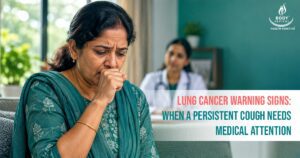
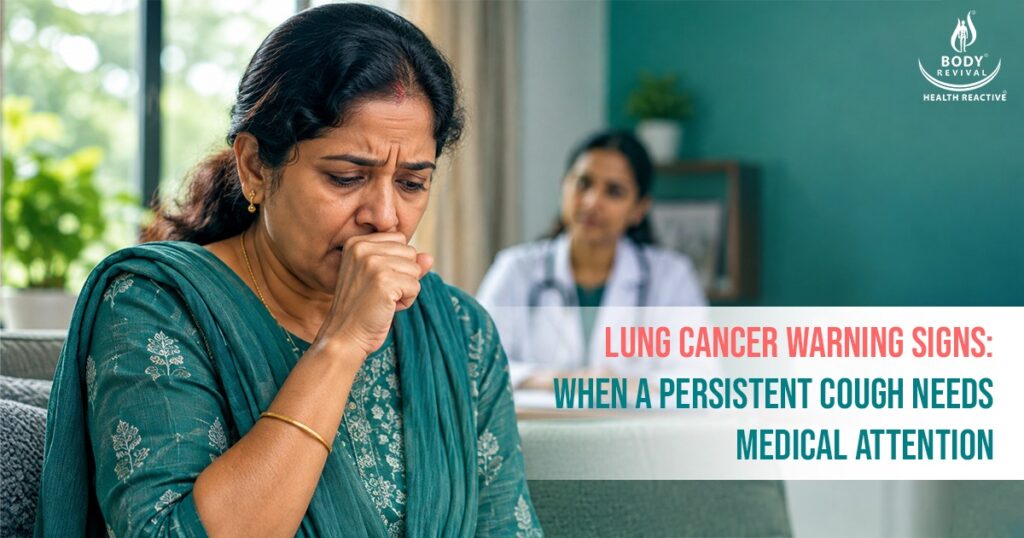
Most coughs are not lung cancer. Colds, infections, asthma, allergies, acid reflux and smoking-related lung conditions cause far more coughs than cancer does. But a cough that does not go away, a cough that changes or gets worse, or a cough with other warning signs should be checked by a doctor. The NHS advises seeing a doctor for a cough lasting longer than 3 weeks. In India, a cough of 2 weeks or more is also a common trigger for TB testing, so a prompt check can rule out more than one cause. Coughing up blood, trouble breathing and chest pain need prompt attention, whatever the cause.
Lung Cancer Awareness Month: why this matters
November is Lung Cancer Awareness Month, a time to talk about a cancer that is often found late because early symptoms can be mild or easy to put down to something else. The World Health Organization says lung cancer was the leading cause of cancer death worldwide in 2022, with about 2.5 million new cases and 1.8 million deaths (WHO fact sheet). In India, GLOBOCAN’s 2024 estimates list about 112,659 new lung cancer cases (the third most common cancer, at 7.2% of all cases) and 98,687 deaths, making lung cancer the leading cause of cancer death in the country. Among men it is the second most common cancer.
Awareness is useful only if it leads to a calm, practical response: know the signs, get them checked, and do not panic. Most people who have these symptoms do not have lung cancer.
Most coughs are not cancer: common causes

A cough is the body’s way of clearing the airways. Many conditions can make it last:
| Possible cause | Clues |
| Viral cold or flu | Often settles within about a week to ten days, with runny nose, sore throat or fever |
| After-infection cough | A dry cough that lingers for weeks after a chest infection |
| Asthma or allergy | Cough with wheeze or breathlessness, worse at night or around triggers such as dust, smoke or pollen |
| COPD or chronic bronchitis | Long-standing cough with phlegm, usually in people who smoke or have smoked |
| Acid reflux | Cough with heartburn, sour taste or throat clearing, often after meals or lying down |
| Tuberculosis (TB) | Cough, often with evening fever, night sweats, weight loss, tiredness, sometimes blood |
| Some medicines | Certain blood pressure tablets can cause a dry cough; ask your doctor |
| Air pollution and smoke exposure | Irritation of the airways, often worse in winter or in high-pollution cities |
Because several of these look alike, only an assessment can tell them apart. That is the point of getting a persistent cough checked: not to assume cancer, but to find the cause.
Lung cancer warning signs
The five signs below are the ones most often named in lung cancer guidance. They come from the NHS, WHO and US National Cancer Institute (NCI) symptom lists. Each of them has many other causes.
- A cough that does not go away, or gets worse. The NHS gives “a cough for longer than 3 weeks” as the point to see a GP. A long-standing cough that changes (becomes harsher, more frequent, or produces different phlegm) is also worth reporting, especially in smokers and former smokers.
- Coughing up blood. Even a small amount of blood or rust-coloured phlegm should be checked. It has several possible causes, including infection, but it should not be ignored.
- Chest or shoulder pain. Pain that is persistent, or that gets worse when you breathe deeply, cough or laugh.
- Breathlessness or wheezing. Getting short of breath doing things that used to be easy, or a new wheeze.
- Weight loss without trying, with loss of appetite and tiredness. Losing weight when you have not changed your diet or activity, especially with ongoing tiredness, needs a check.
Other signs listed by the NHS, WHO and NCI include chest infections that keep coming back or do not clear, a hoarse voice that does not go away, trouble swallowing, swelling of the face or neck, and clubbing (rounded, widened fingertips). Sometimes lung cancer causes no symptoms at all, according to the NCI. The American Cancer Society also notes that most of these symptoms are more likely to be caused by something other than lung cancer, but still need prompt evaluation.
When to seek assessment
| Situation | What to do |
| Severe trouble breathing, or sudden chest or upper back pain | Get emergency help now. In India, call your local emergency number (108 or 112). |
| Coughing up blood | Get seen urgently, the same day if possible. |
| A cough lasting longer than 3 weeks (NHS advice) | See a doctor. In India, a cough of 2 weeks or more also calls for TB testing. |
| Unexplained weight loss, loss of appetite or constant tiredness | Book an appointment soon, even without a cough. |
| Repeated chest infections, a hoarse voice that will not clear, new wheeze or breathlessness | See a doctor within a week or two. |
| A cough with a clear cause that is improving (for example a cold) | Rest and fluids; see a doctor if it does not settle. |
It is fine to ask for a check even if you are unsure. A persistent cough that turns out to be an infection or asthma is a good result, and you get treatment for it.
The TB question in India
India accounts for about 25% of new TB cases worldwide, according to the WHO’s 2026 TB fact sheet. TB and lung cancer can look alike: both can cause a long-lasting cough, weight loss, tiredness and coughing up blood. A Business Standard report quotes a doctor advising a TB visit for a cough lasting longer than two weeks. This matters in two ways. A persistent cough in India should prompt a TB check early, and if TB tests are negative or treatment does not help, doctors may look for other causes, including lung cancer. If you are told you have TB but are not improving, go back and tell your doctor.
Who is at higher risk?

- Tobacco use: The WHO attributes about 60 to 70% of lung cancer to tobacco smoking. In India this includes bidis, cigarettes and other smoked tobacco.
- Secondhand smoke: Living or working with smokers raises risk.
- Air pollution: Household air pollution (such as smoke from cooking fires) and outdoor air pollution are recognised risk factors.
- Workplace exposures: Asbestos, silica and diesel exhaust.
- Radon, chronic lung disease and family history.
- People who have never smoked can also develop lung cancer. See our post on – Lung cancer in non-smokers.
A higher risk does not mean you will get lung cancer. It means a persistent cough or other warning sign should be taken seriously.
What happens at an assessment
If you see a doctor about a persistent cough, they usually start with your history and an examination. Depending on what they find, tests may include:
- Chest X-ray to look at the lungs.
- CT scan for a more detailed picture of the chest.
- Sputum tests, including tests for TB where relevant.
- Blood tests to check for infection, anaemia and general health.
- Bronchoscopy or biopsy if a spot or growth needs to be examined and tested. According to the NCI, biopsies can be done with a needle, through the airways (bronchoscopy), or by other methods, and tissue is also tested for molecular features that guide treatment.
Many assessments end with a reassuring answer, or with an infection, asthma or TB diagnosis that can be treated.
What about lung cancer screening?
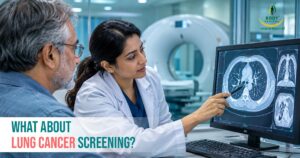
Screening means testing people who have no symptoms. For lung cancer, the test studied is a low-dose CT (LDCT) scan, and it is meant only for a defined group.
- Who: The NCI describes the main US trial population as adults aged 55 to 74 with a heavy smoking history (at least a pack a day for 30 years or more) who currently smoke or quit within the last 15 years. The WHO says screening can be considered for heavy current or former smokers in well-resourced health systems, with proper quality assurance and follow-up.
- Benefits and harms: In that group, annual LDCT was better than chest X-ray at finding early lung cancer and reduced the risk of dying from it. Harms include false alarms that can lead to unnecessary tests, possible overdiagnosis, and low radiation exposure. The NCI notes that younger people and people at low risk are more likely to be harmed by the radiation than helped.
- In India: Whether LDCT screening is suitable and available depends on your risk, your doctor and the hospital. Ask your doctor before booking a scan.
Screening is not a substitute for getting symptoms checked. If you have a persistent cough, see a doctor rather than waiting for a screening slot.
Lowering your risk
- Quit tobacco in every form (cigarettes, bidis, hookah, chewing tobacco). It is the biggest single step. Ask your doctor about quit support.
- Avoid secondhand smoke.
- Reduce smoke exposure at home, for example by using clean cooking fuels and good ventilation where you can.
- Use workplace protection if you work with dust, fumes or asbestos.
- Eat well and stay active as part of overall health.
A balanced approach: from awareness to support
| Stage | What helps |
| Notice | Know the warning signs and what is normal for you. |
| Get checked | See a doctor about a cough that lasts, coughing blood, chest pain, breathlessness or unexplained weight loss. |
| Find the cause | Tests tell infection, asthma, TB and other conditions apart from lung cancer. |
| Treat | If lung cancer is diagnosed, your healthcare team plans treatment. |
| Support | Nutrition, breathing comfort, rest, emotional support and supportive care such as Body Revival, alongside medical treatment. |
If a diagnosis is made: supportive care
If lung cancer is diagnosed, treatment is led by your healthcare team. Many people also look for ways to feel stronger during treatment: small, frequent, protein-rich meals when breathing or appetite is a problem, gentle activity as advised, and emotional support. See our Diet chart for meal ideas.
Where Body Revival fits: supportive care alongside lung cancer treatment

Getting a diagnosis is the start of a different phase. Your healthcare team leads the treatment, and that stays at the centre. Around it, many people and families ask a second question: “What else can help me feel stronger day to day?” That is the space where supportive care sits, and it is where Body Revival is designed to fit.
What people often ask for help with, and who helps
| Everyday concern during treatment | Who and what helps | Where Body Revival fits |
| Appetite and weight loss | Your dietitian and doctor; small, frequent, protein-rich meals. | A daily supportive-care routine alongside good nutrition, not instead of it. |
| Tiredness and low stamina | Rest, gentle activity as advised, and treating causes such as anaemia | Supportive care that you and your doctor review together. |
| Cough, breathlessness, chest pain | Your medical team treats these directly. Report them early. | Body Revival is not a treatment for these. It sits alongside your medical care as part of a whole-person approach. |
| Worry and low mood | Family, counselling, support groups and your care team | Part of an overall routine that gives you and your family something practical to do. |
What Body Revival is
Body Revival is a clinically tested Ayurvedic medicine made for people who want supportive care during their cancer journey. It is a brand of Health Reactive, an Indian company.
What the research says so far
Body Revival ayurvedic medicine is registered with the Clinical Trials Registry of India (CTRI/2023/11/059465). The published summary reports observations on quality of life, performance status and treatment-related side effects. This was one study, in a specific group of cancer patients in India, and individual results vary. You can read the summary on Body Revival’s website.
How to bring it into your routine, step by step
- Talk to the doctor first. Show them the full ingredient list and the label. Tell them about any allergies (the formulation includes honey and garlic, diabetes, liver or kidney problems, and every medicine you take, including blood thinners and targeted or immunotherapy drugs.
- Start as the label directs, and keep taking your prescribed treatment exactly as advised.
- Keep a simple daily log: appetite, energy, weight, sleep, cough and breathing. It helps both you and your doctor see what is changing.
- Report changes, good or bad, to your healthcare team.
- Build on the basics: meals, fluids, rest, gentle movement and emotional support.
Questions to ask Doctor
- Is it safe for me to take Body Revival alongside my current treatment?
- Is there a better or worse time to take it around chemotherapy, radiation or targeted therapy days?
- Which symptoms should make me call you straight away?
- Who can help with my diet and weight?
Frequently Asked Questions
1. When does a persistent cough need medical attention?
The NHS advises seeing a doctor if you have had a cough for longer than 3 weeks. In India, a cough of 2 weeks or more is also a reason to test for TB. See a doctor sooner if you cough up blood, have chest pain, are short of breath, or are losing weight without trying.
2. Does a long-lasting cough mean lung cancer?
No. Most long-lasting coughs are caused by infections, asthma, allergies, reflux, TB or smoking-related lung conditions. A check finds the cause.
3. Is coughing up blood always a sign of lung cancer?
No. It can be caused by infection, bronchitis, TB and other conditions. But it should always be checked promptly.
4. Can chest pain be a sign of lung cancer?
It can be. Persistent chest or shoulder pain, or pain that worsens with deep breaths or coughing, should be checked. Chest pain has many other causes, including muscle strain and heart conditions. Severe or sudden chest pain needs emergency help.
5. What kind of breathlessness is a warning sign?
Breathlessness that is new, getting worse, or happening during activities that used to be easy. If you are struggling to breathe, get emergency help.
6. Can unexplained weight loss be a sign of lung cancer?
Yes, along with loss of appetite and tiredness. It can also be caused by many other conditions, including TB, thyroid problems and diabetes, so see a doctor.
7. How is TB different from lung cancer?
Both can cause a long cough, weight loss and blood in the phlegm, and only tests can tell them apart. TB often comes with evening fever and night sweats, and it is treatable.
8. Can non-smokers get lung cancer?
Yes. Air pollution, secondhand smoke, workplace exposures and other factors can play a part. See our post on Lung cancer in non-smokers.
9. What tests will my doctor do for a persistent cough?
Usually a history, an examination and a chest X-ray, and sometimes a CT scan, sputum tests and blood tests. Biopsy or bronchoscopy are only needed if something suspicious is found.
10. Should I get a lung cancer screening scan?
LDCT screening is studied for heavy current and former smokers, not for everyone. Talk to your doctor about whether it is suitable for you. If you have symptoms, get a diagnostic check instead.
11. How can I lower my risk of lung cancer?
Do not use tobacco in any form, avoid secondhand smoke, reduce smoke exposure at home and work, and get persistent symptoms checked.
12. What is Body Revival and how does it fit in?
Body Revival is an Ayurvedic herbal supplement for supportive care during cancer treatment, made by Health Reactive. It is designed to be taken alongside medical treatment as part of a whole-person approach.
13. Can I take Body Revival during chemotherapy, radiation or targeted therapy?
Many people take supportive supplements alongside treatment. Share the ingredient list with doctor first so they can advise on timing and any interactions.
14. Can Body Revival help with a cough or breathlessness?
Body Revival is a supportive-care supplement and not a treatment for cough or breathlessness. A persistent cough, breathlessness, chest pain or coughing blood needs a medical assessment, whatever else you are taking.
15. Who should check with their doctor before starting Body Revival?
Everyone in treatment should. Please be especially careful to mention allergies, diabetes, liver or kidney conditions and blood-thinning medicines.
16. Where can I get Body Revival?
In the UAE, Body Revival is distributed by Tibbey Nabi, based in Business Bay, Dubai (consult@tibbeynabi.com). Online delivery is also available across the globe.
FAQ in Hinglish
1. Lagatar khansi par doctor ko kab dikhayein?
NHS ke anusaar 3 hafte se zyada khansi rahe to doctor ko dikhayein. India mein 2 hafte ya usse zyada ki khansi par TB ki jaanch bhi karwani chahiye. Khansi ke saath khoon aaye, seene mein dard ho, saans phoole ya bina koshish ke wazan kam ho to jaldi dikhayein.
2. Kya lambi khansi ka matlab lung cancer hota hai?
Nahi. Zyadatar lambi khansi infection, asthma, allergy, acidity, TB ya smoking se hone wali phephdon ki bimariyon se hoti hai. Jaanch se asli wajah pata chalti hai.
3. Kya khansi mein khoon aana hamesha lung cancer hota hai?
Nahi. Ye infection, bronchitis, TB ya anya kaaranon se ho sakta hai. Lekin har baar turant jaanch karwani chahiye.
4. Kya seene mein dard lung cancer ka lakshan ho sakta hai?
Ho sakta hai. Lagatar seene ya kandhe ka dard, ya gehri saans ya khansi par badhne wala dard dikhana chahiye. Iske kai aur kaaran bhi hote hain. Tez ya achanak dard mein turant emergency madad lein.
5. Kaisi saans phoolna chinta ki baat hai?
Jo nayi ho, badh rahi ho, ya un kaamon mein ho jo pehle aasaan the. Saans lene mein takleef ho rahi ho to turant emergency madad lein.
6. Kya bina wajah wazan kam hona lung cancer ka lakshan ho sakta hai?
Haan, bhookh kam hone aur thakaan ke saath. Lekin TB, thyroid aur diabetes jaisi kai aur bimariyon mein bhi aisa hota hai, isliye doctor ko dikhayein.
7. TB aur lung cancer mein kya antar hai?
Dono mein lambi khansi, wazan kam hona aur balgam mein khoon ho sakta hai, aur sirf jaanch se fark pata chalta hai. TB mein aksar shaam ko bukhaar aur raat ko paseena aata hai, aur TB ka ilaaj hota hai.
8. Kya non-smoker ko bhi lung cancer ho sakta hai?
Haan. Pradushan, doosron ka dhuan, kaam ki jagah ke exposure aur anya kaaran bhoomika nibha sakte hain.
9. Lagatar khansi mein doctor kaun si jaanch karte hain?
Aam taur par history, examination aur chest X-ray, kabhi-kabhi CT scan, balgam aur khoon ki jaanch. Biopsy ya bronchoscopy tabhi jab kuch sandehjanak dikhe.
10. Kya mujhe lung cancer screening scan karwana chahiye?
LDCT screening bhaari smoking karne wale (ya chhodne wale) logon ke liye study ki gayi hai, sab ke liye nahi. Apne doctor se poochhein ki ye aapke liye sahi hai ya nahi. Lakshan hon to screening ki jagah diagnostic jaanch karwayein.
11. Lung cancer ka khatra kaise kam karein?
Kisi bhi roop mein tambaakoo na lein (cigarette, beedi, hookah, khaini), doosron ke dhuan se bachein, ghar aur kaam ki jagah par dhuan kam karein, aur lagatar lakshan ki jaanch karwayein.
12. Body Revival kya hai aur ye kahan fit hota hai?
Body Revival ek Ayurvedic herbal supplement hai jo cancer ke ilaaj ke dauran supportive care ke liye banaya gaya hai, aur doctor ke ilaaj ke saath, poore sehat ke nazariye ke ek hisse ke roop mein liya jaata hai.
13. Kya chemo, radiation ya targeted therapy ke dauran Body Revival le sakte hain?
Kai marij ilaaj ke saath supportive supplements lete hain. Shuru karne se pehle apne doctor ko ingredient list dikhayein taaki wo timing aur kisi interaction ke baare mein salah de sakein.
14. Kya Body Revival khansi ya saans phoolne mein madad karta hai?
Body Revival ek supportive-care supplement hai, khansi ya saans phoolne ka ilaaj nahi. Lagatar khansi, saans phoolna, seene mein dard ya khansi mein khoon ke liye doctor se jaanch zaroori hai.
Final takeaway
A cough is one of the most common symptoms there is, and almost always it is not cancer. But a cough that lasts, a cough with blood, new chest pain, breathlessness or unexplained weight loss are signs worth a check, because finding the cause early gives every condition, from TB to asthma to lung cancer, the best chance of the right treatment. This Lung Cancer Awareness Month, know the signs, get a lasting symptom checked without panic, avoid tobacco, and if a diagnosis does come, lean on your healthcare team, good nutrition and supportive care such as Body Revival, alongside treatment.
Disclaimer
This article is for general information only and is not medical advice. Body Revival is an herbal supportive-care supplement intended to be used alongside, not a replacement.
References
- NHS: Symptoms of lung cancer (reviewed August 2026)
- World Health Organization: Lung cancer fact sheet (April 2026); Tuberculosis fact sheet (March 2026)
- National Cancer Institute: Non-small cell lung cancer treatment (PDQ), patient version; Lung cancer screening (PDQ), patient version
- American Cancer Society: Lung cancer signs and symptoms
- GLOBOCAN 2024: India fact sheet (IARC / Global Cancer Observatory)
- Business Standard: Not every cough is viral: when to check for early signs of tuberculosis (March 2026)
- American Lung Association: Lung Cancer Awareness Month (November)
- Clinical Trials Registry of India: CTRI/2023/11/059465 (search the registry by this number)
- Body Revival: Clinical trial of Body Revival