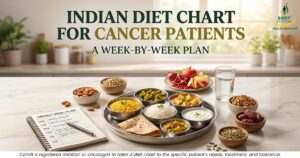
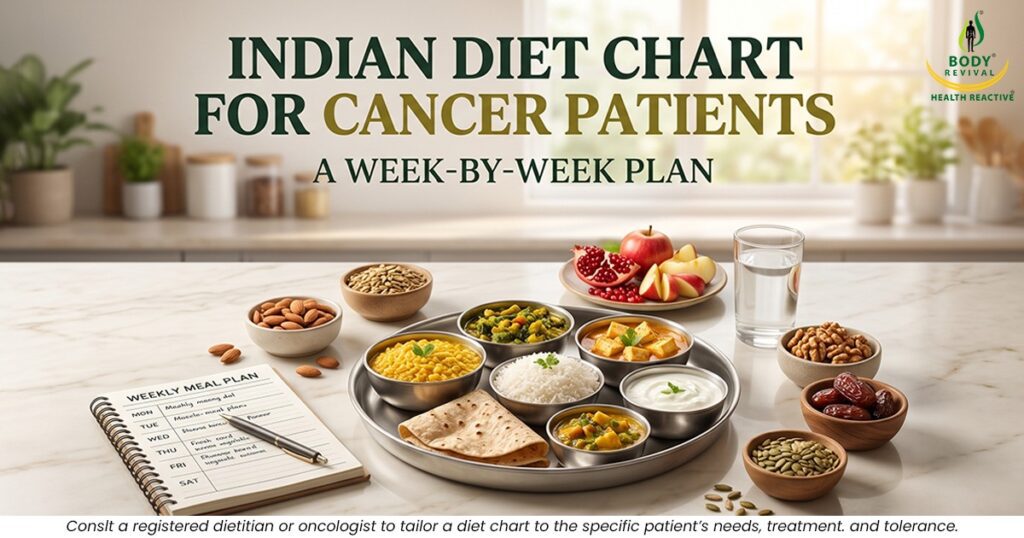
Yes. Most people can keep eating familiar Indian food during chemotherapy or radiation. Dal, roti, rice, khichdi, curd, eggs and well-cooked chicken are usually fine unless your healthcareteam has told you otherwise. What changes is how the food is cooked and handled: soft, freshly made, thoroughly cooked and eaten in small, frequent meals. The goal is enough protein and calories to keep your strength up, with food that is safe when your blood counts are low.
This guide gives you a 7-day Indian meal chart, a plan that follows the phases of a chemo cycle and a radiation course, and a gentle Ayurvedic-style layer on top: warm, simple, freshly cooked food and a few daily habits. It also explains where Body Revival, an Ayurvedic supportive-care supplement, can fit, if your doctor agrees. It is not a substitute for your dietitian’s advice, because every treatment, cancer type and blood report is different.
How This Plan is Built: Two Layers
Layer 1: Nutrition and safety (the foundation). Enough protein and calories, small frequent meals, fluids, thoroughly cooked food, and food-safety habits when counts are low. This part follows medical nutrition guidance.
Layer 2: Ayurvedic-style support (the supportive layer). In Ayurveda, digestion (agni) is central, and patients are traditionally advised to eat warm, freshly cooked, easily digestible food at regular times (pathya). These are traditional ideas. They are not proven cancer treatments, but they overlap well with what many patients find easiest to eat during treatment. Body Revival belongs in this layer, as supportive care and not as treatment.
Each section below marks which layer a tip belongs to, so you can see what is nutrition advice and what is traditional practice.
Why Diet Matters During Cancer Treatment
Chemotherapy and radiation can cause nausea, mouth sores, taste changes, constipation, diarrhoea and fatigue, all of which make eating harder. Eating too little can lead to weight loss, weakness and a harder time getting through treatment. Most nutrition guidance focuses on three things: getting enough protein and calories, staying hydrated, and handling food safely when your white cell count may be low.
One Indian hospital nutrition guide suggests about 1.0 to 1.5 grams of protein per kilogram of body weight per day for many patients. Your own target may differ, so ask doctor or dietitian for a number that fits your kidney function, cancer type and treatment.
Ayurvedic-style view: Traditional practice stresses eating at regular times, in a calm setting, and stopping before you feel overfull. This fits well with the “small, frequent meals” advice used in modern cancer nutrition.
Can I Eat Dal, Roti And Rice During Chemo?
Yes, for most people. These staples give carbohydrates for energy, and dal gives plant protein.
- Dal: Cook it until soft. Moong and masoor dal are gentle on the stomach. Add a little ghee or oil for calories. If you have bloating or gas, thin the dal and try moong first.
- Roti and rice: Soft phulkas, rice, khichdi, dalia and ragi are all fine. If you are nauseated, plain rice or khichdi is often easier than heavily spiced food. If you have diarrhoea, white rice, banana and curd rice are often better tolerated than whole-grain roti. If you are constipated, whole-wheat roti, dalia and ragi help.
- Spices: Reduce chilli, and be careful with very oily or fried food (parathas, pakoras, puri) if you have nausea, mouth sores or acidity.
Ayurvedic-style layer: Khichdi with a little ghee, jeera and haldi is the classic “easy-to-digest” meal in Ayurvedic tradition, and it happens to match what dietitians recommend for sensitive stomachs. Keep ghee modest, especially if you have raised cholesterol or fatty-food intolerance.
Are Eggs And Chicken Allowed During Cancer Treatment?
In most cases, yes, as long as they are fully cooked. Eggs and chicken are good sources of protein.
- Eggs: Cook them until both the yolk and white are firm. Hard-boiled eggs, well-cooked egg bhurji and egg curry are fine. Avoid half-fried eggs, runny yolks, raw-egg shakes and homemade mayonnaise made from raw eggs.
- Chicken and other meat: Cook chicken to an internal temperature of about 74°C (165°F) and minced meat to about 71°C (160°F), in line with food-safety guidance for people with weak immunity. Chicken soup and soft chicken curry are often easier than dry grilled meat. If nausea is a problem, cold or room-temperature meat has less smell and may be easier to tolerate than hot dishes.
- Fish: Well-cooked fish curry is usually fine, but ask your team if your counts are low. Avoid raw or undercooked fish.
- If you are vegetarian: Combine protein sources through the day: dal, curd, paneer, milk, besan, tofu (boiled for a few minutes if it is from a refrigerated pack), soya, chana and sprouts that have been cooked thoroughly.
Ayurvedic-style layer: Traditional texts often favour simple soups and broths (yusha) when digestion is weak. Moong dal soup or a clear chicken soup fits this idea while also supplying protein.
Cancer Patient Diet Chart For India: A 7-Day Plan
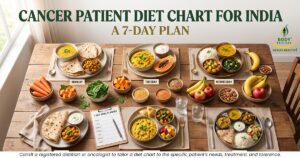
This is a sample, not a prescription. Swap items for what you can tolerate and what is available locally. Eat small portions every 2 to 3 hours. Keep all food freshly cooked and avoid leftovers older than a day.
| Day | Breakfast | Lunch | Evening | Dinner | Ayurvedic-style touch |
| Mon | Moong dal chilla with curd | Soft dal, rice, lauki sabzi | Buttermilk with roasted chana | Vegetable khichdi | Warm water through the day; jeera in tempering |
| Tue | Vegetable upma and a glass of milk | Roti, dal, cooked palak | Banana milkshake | Paneer bhurji with soft roti | A little ghee on roti; eat sitting down, unhurried |
| Wed | Idli and sambar | Curd rice with cooked carrot and beans | Papaya or banana | Dalia with vegetables | Light, warm dinner at a fixed time |
| Thu | Besan chilla with curd | Roti, mixed dal, bhindi | Lassi from home-set curd | Moong dal soup and roti | Ajwain or hing in the dal if bloating |
| Fri | Poha with peas and milk | Rice with well-cooked chana or rajma | Ragi porridge | Khichdi and curd | Ginger in food (small amount) if tolerated |
| Sat | Ragi dosa and sambar | Roti, dal tadka, cooked vegetables | Roasted chana and coconut water | Boiled tofu or paneer curry with rice | Haldi in food only (normal cooking amount) |
| Sun | Dal or paneer paratha with curd | Jeera rice, dal, cooked vegetables | Fruit or milkshake | Vegetable soup with roti or dalia | Rest day: simplest food, extra rest |
Non-vegetarian swaps: Hard-boiled egg or well-cooked egg bhurji at breakfast; fully cooked egg or chicken curry at lunch or dinner; clear chicken soup in the evening; well-cooked fish curry if your team allows.
Fluids: Aim for the amount your doctor recommends (often 2 to 3 litres a day unless you have a fluid restriction). Water, coconut water, buttermilk, clear soups, dal water and diluted fresh juice all count. Sip through the day instead of drinking large amounts with meals.
Check with your team first: Coconut water is high in potassium, which matters if you have kidney problems.
Week-By-Week Plan Through A Chemotherapy Cycle
Chemotherapy usually runs in cycles of two to four weeks. Your appetite and energy tend to follow a pattern within each cycle, so the diet changes too. The table below is a general guide, and your own cycle may look different.
| Phase | Nutrition focus (Layer 1) | Ayurvedic-style support (Layer 2) |
| Days 1 to 3 (infusion and just after) | Small, bland meals. Clear fluids, plain khichdi, toast, curd rice, banana. Avoid greasy, strongly smelling food. Eat cold or room-temperature food if smells bother you. | Warm water or light jeera water in sips. Keep meals simple and avoid new herbs or kadhas. |
| Days 4 to 7 (nausea, fatigue, taste changes, possible low appetite) | Prioritise protein in small portions: dal water, curd, egg, soft paneer. Try cold foods and lemon or ginger if tolerated. | Lightly spiced, freshly cooked food. Rest between meals. |
| Week 2 (counts often at their lowest in many regimens) | Strict food safety (see below). Cook everything through. Avoid raw salads, street food and unpasteurised dairy. | Choose cooked, warm foods over raw or cold. |
| Week 3 (recovery, appetite returns) | Build back: add calories and protein, more fruit and vegetables (cooked or peeled), whole grains if tolerated. | A regular daily routine: meals, rest and short walks at consistent times. |
Doctors may tell you exactly when your counts are lowest. Follow that advice over the general pattern.
Week-By-Week Plan Through A Radiation Course
If you are on radiation, the pattern is different. Side effects tend to build gradually and depend on the area treated. For more on stages of radiotherapy, see this nutrition guide.
| Stage | What often happens | Diet focus |
| Weeks 1 to 2 | Few side effects yet | Build your reserves. Eat enough protein and calories, drink fluids, and keep a regular meal schedule. |
| Weeks 3 to 4 | Fatigue, taste change, mouth or throat soreness (head and neck), bowel changes (abdomen and pelvis) | Soft, moist, mild food: khichdi, dalia, mashed vegetables, soups, milkshakes. Avoid very hot, spicy, sour or crunchy food if the mouth or throat is sore (see MSK’s diet guide for head and neck cancer treatment). |
| Weeks 5 to 6 | Side effects may peak | Smaller, more frequent meals and liquid nutrition if solids are hard. Tell your team early if you cannot eat or drink enough. |
| After radiation | Side effects can continue for a few weeks | Continue the gentle diet until your team clears you to widen it. |
Ayurvedic-style layer: Traditional practice favours “cooling”, soothing foods for irritation, such as buttermilk, coconut water, rice-based dishes and well-cooked vegetables like lauki. This is traditional logic, not a proven treatment for radiation side effects, but these foods are also practical when the mouth and gut are sensitive. Always check coconut water and electrolyte drinks with your team if you have kidney or heart issues.
What Should I Eat When Nothing Tastes Good?
Taste changes are common. Chemotherapy can cause a metallic or bitter taste, and radiation to the head and neck can dull the taste. Try these:
- Metallic taste: Use plastic or wooden cutlery, try cold foods, suck on lemon wedges or sugar-free sweets, and rinse your mouth before eating.
- Food tastes bland: Add flavour with herbs, lemon, jeera, coriander and mild masalas.
- Food tastes too sweet or too salty: Dilute or balance with a little lemon or salt.
- Meat tastes odd: Try eggs, dal, paneer, curd or chicken soup instead.
- Smell triggers nausea: Eat cold or room-temperature food, keep the kitchen ventilated, and ask someone else to cook.
- No appetite at all: Treat food like medicine on a schedule. Set a phone alarm every 2 to 3 hours and take a few bites or sips (see the NCI page on appetite loss).
- Liquid calories: Milkshakes, lassi, soups, dal water and homemade ORS count as nutrition.
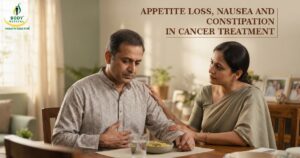
Ayurvedic-style layer: Warm, lightly spiced soups, ginger in small amounts, and a short walk before meals are traditional ways to stimulate appetite. Evidence for ginger against chemo nausea is mixed (see also the Nursing Society summary), so use it as a flavour, not a remedy. For more ideas, see our blog on appetite loss, nausea and constipation.
Food Safety at Home
When your white cell count is low, infections from food can be serious. Your team will say whether you need strict precautions. The American Cancer Society, MedlinePlus and Roswell Park all publish practical home-safety guidance.
- Wash hands before cooking and eating.
- Cook eggs until the yolk and white are solid, poultry to about 74°C (165°F), and minced meat to about 71°C (160°F).
- Avoid raw sprouts, raw nuts, raw honey, street food, unpasteurised milk and anything that has been sitting out.
- Wash and peel fruit. Choose cooked vegetables over raw salad if your counts are low.
- Use separate cutting boards for raw meat and vegetables.
- Refrigerate leftovers quickly and eat them within a day. Reheat until steaming hot.
- If you are unsure about a food, ask your team.
A note on nuts: Because raw nuts can be an issue when counts are low, roasted chana or well-cooked, softened options are a safer snack than raw soaked almonds unless your team says otherwise.
Foods to Limit or Avoid
- Raw or undercooked meat, fish and eggs
- Street food, chaat and pani puri (hygiene risk)
- Unpasteurised milk and soft cheese
- Raw sprouts, raw salads and unwashed fruit
- Very spicy, very oily or fried food if it worsens nausea, acidity or mouth sores
- Alcohol and tobacco
- Fad diets, extreme fasting and “detox” programmes, which can cause weight loss and weakness during treatment
- Ayurvedic medicine, kadhas and supplements that doctors has not reviewed (see next section)
Ayurveda and the Cancer Diet: What it Can & Cannot do
Ayurveda offers a useful framework for eating: warm, fresh, simple food, regular timing, calm meals and attention to digestion. Many patients find this comforting, and it fits well with modern advice about soft, easy-to-digest meals. A recent ASCO Post review of Ayurveda in cancer care discusses both its place in supportive care and the need for more rigorous evidence.
What Ayurvedic principles do not do is replace cancer treatment. There is no good evidence that any diet or herb cures cancer, and some herbs can interact with chemotherapy or affect the liver, blood pressure or blood clotting. For example, Memorial Sloan Kettering advises caution with ashwagandha during treatment, and herbs like giloy, mulethi (liquorice) and concentrated turmeric supplements should be reviewed by healthcare professional first. For a fuller look at this topic, read our guide to ayurvedic medicine supplements during chemotherapy.
Practical rules for the Ayurvedic layer:
- Tell your doctor about every herb, kadha, churna and supplement you take, including Body Revival.
- Use haldi, jeera, ajwain, ginger and coriander as normal cooking spices, not as high-dose remedies.
- Be careful with triphala and other laxative herbs, especially around chemotherapy when diarrhoea or dehydration is possible.
- Avoid homemade kadhas of unknown strength during chemo and radiation unless your doctor agrees.
- Keep ghee modest if you have raised cholesterol, fatty-food intolerance or gallbladder issues.
- Use an Ayurvedic practitioner only alongside, not instead of, your healthcare team, and make sure they know your treatment plan.
Body Revival: Ayurvedic Supportive Care Alongside A Good Diet
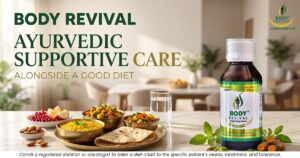
Body Revival is an Ayurvedic supplement positioned as supportive care for people going through cancer treatment. It is not a medicine that can cure. It does not replace modern treatment your doctor has advised.
Where it fits in this plan: Think of a good diet as the base, with Body Revival as an optional extra layer of support. It does not replace the meals above. The meals, fluids, protein and food safety come first.
About the trial: A study of Body Revival in breast cancer is registered with the Clinical Trials Registry of India (CTRI/2023/11/059465). Registration means the study is listed with the registry. It does not mean the product is approved or proven.
What the product contains and how to take it:
Safe use:
- Talk to doctor before starting, and show them the full ingredient list. Our article on ayurvedic immunotherapy during chemotherapy explains what to ask.
- Do not start, stop or change it on your own during chemotherapy or radiation.
- Report any new symptoms, such as nausea, rash, diarrhoea or abnormal blood tests, to your doctor.
- Do not use it as a reason to skip meals, skip treatment or delay medical care.
When to Call Your Doctor About Eating Problems
Call healthcare team promptly if:
- You cannot keep down fluids for 24 hours, or vomiting does not stop.
- You have severe diarrhoea, or no bowel movement for several days with pain or swelling.
- You have a fever, chills or signs of infection.
- You are losing weight quickly or cannot eat enough despite trying.
- You have mouth sores or throat pain that stops you eating or drinking.
- You feel dizzy, very weak, or notice dark urine (signs of dehydration).
- You have new symptoms after starting any herb or supplement.
Go to emergency care for severe pain, trouble breathing, confusion or fainting. In the UAE, call 998 for an ambulance. In India, call 108 or your hospital’s emergency number. Caregivers can find a full checklist of warning signs in our guide to caring for a cancer patient at home.
How Families can Help
- Prepare small, fresh portions instead of large plates.
- Cook and serve food the patient asks for, even at odd times.
- Keep the kitchen well ventilated and avoid strong cooking smells near the patient.
- Offer food in a relaxed way without pressure or guilt.
- Keep a simple log of what was eaten, vomiting, bowel movements and weight to share with the doctor.
- Do not push herbs, kadhas or “cancer-fighting foods” from family or social media without checking with the doctor.
If you are the main carer, our caregiver’s daily guide to cancer care at home covers medicines, appointments and how to avoid burnout.
Frequently Asked Questions
1. Can I eat dal, roti and rice during chemotherapy?
Yes, for most people. Cook dal soft, choose roti or rice according to your digestion (white rice for diarrhoea, whole-wheat or dalia for constipation), and reduce chilli and oil if you have nausea.
2. Are eggs and chicken allowed during cancer treatment?
Usually yes, if fully cooked. Eggs should have solid yolk and white, and chicken should be cooked through. Avoid runny eggs and raw-egg preparations.
3. What should I eat when nothing tastes good?
Try cold or room-temperature food, add lemon or mild spices, use plastic cutlery for metallic taste, and rely on soups, dal water, milkshakes and lassi for calories and protein. Eat small amounts every 2 to 3 hours.
4. Is there one Indian diet chart that suits every cancer patient?
No. Needs vary with cancer type, treatment, blood counts, diabetes, kidney function and appetite. Use the sample chart as a starting point and ask dietitian to adjust it.
5. How much protein do I need during chemo?
Often more than usual. One Indian hospital guide suggests about 1.0 to 1.5 g per kg of body weight daily for many patients, but your target should come from your own team.
6. Are khichdi, ghee and turmeric helpful?
Khichdi is easy to digest and good for a low appetite. Ghee adds calories if you tolerate it. Turmeric in normal cooking amounts is fine, but concentrated turmeric supplements should be cleared with your doctor.
7. Does Ayurveda have a special diet for cancer?
Ayurveda emphasises warm, fresh, easily digestible food and regular eating habits. These ideas can support comfort during treatment, but no Ayurvedic diet has been proven to treat or cure cancer.
8. Can I drink kadha or herbal tea during chemo?
Only after checking with your doctor. Some herbs can interact with treatment, affect the liver or change blood counts or blood pressure. Read more in our guide to ayurvedic medicine during chemotherapy.
9. Can I take Body Revival along with this diet?
Many patients take supportive supplements alongside treatment, but you should discuss Body Revival with doctor first and share the ingredient list. See what to ask about ayurvedic medicine during chemotherapy.
10. Is Body Revival a replacement for treatment or a good diet?
No. It is supportive care and does not replace chemotherapy, radiation, surgery or healthy eating.
11. Should I avoid raw salad and sprouts?
When your counts are low, yes. Choose cooked or peeled options and ask your team when raw foods are safe again.
12. Are milk and curd safe during chemo?
Pasteurised milk and home-set curd are usually fine and give protein. Avoid unpasteurised milk. If dairy worsens diarrhoea or bloating, try smaller portions or curd and buttermilk instead.
13. I am vegetarian and losing weight. What should I do?
Combine dal, curd, paneer, milk, besan, tofu, soya and chana throughout the day, add ghee or oil for calories, and use milkshakes and soups. A dietitian can help plan this.
14. What should I eat during radiation for head and neck or pelvic cancer?
For a sore mouth or throat, choose soft, moist, mild food and avoid very hot, spicy or sour items. For pelvic or abdominal radiation, bowel changes may call for a low-fibre or low-fat approach for a while. Follow your radiation team’s advice.
15. When should I see a dietitian?
Ideally at the start of treatment, and sooner if you lose weight, cannot eat enough, have diabetes or kidney disease, or need tube or supplement feeding.
Aksar Poochhe Jaane Wale Sawal (FAQ)
1. Kya chemo mein dal, roti aur chawal kha sakte hain?
Haan, zyadatar logon ke liye theek hai. Dal ko achhe se pakayein. Dast ho to safed chawal aur curd rice behtar hain, kabz ho to roti, dalia ya ragi lein. Mirch aur tel kam rakhein.
2. Kya egg aur chicken khana theek hai?
Aam taur par haan, agar achhe se pakaya ho. Anda tab tak pakayein jab tak safedi aur peela hissa dono thos na ho jayein. Kachha ya aadha pakka anda na lein. Chicken poora pakka hona chahiye.
3. Jab kuch accha na lage toh kya khayein?
Thanda ya room-temperature khana try karein, nimbu ya halka masala daalein, aur soup, dal ka paani, milkshake aur lassi se calories aur protein lein. Har 2 se 3 ghante mein thoda-thoda khayein.
4. Kya sabhi cancer patients ke liye ek hi diet chart hota hai?
Nahi. Cancer ka type, ilaaj, blood counts, diabetes aur kidney ki sthiti ke hisaab se zarooratein badalti hain. Sample chart sirf shuruaat hai, apne dietitian se badlaav karwayein.
5. Chemo mein kitna protein chahiye?
Aksar normal se zyada. Ek Indian hospital guide ke mutabik kai marizon ke liye lagbhag 1.0 se 1.5 gram per kg body weight roz. Apna sahi target apni team se poochhein.
6. Kya khichdi, ghee aur haldi faydemand hain?
Khichdi aasaani se pach jaati hai aur kam bhookh mein achhi hai. Ghee calories badhata hai agar aap sahan kar paayein. Haldi khana pakane ki matra mein theek hai, lekin haldi ke concentrated supplement pehle dietitian ya doctor se poochh kar hi lein.
7. Kya Ayurveda mein cancer ke liye koi khaas diet hai?
Ayurveda garam, taaza, aasaani se pachne wala khana aur niyamit samay par khane par zor deta hai. Ye baatein ilaaj ke dauran aaram de sakti hain, lekin koi Ayurvedic diet cancer ko theek karne ke liye saabit nahi hui hai.
8. Kya chemo ke dauran kadha ya herbal chai pee sakte hain?
Pehle doctor se poochhein. Kuch jadi-bootiyan ilaaj ke saath asar kar sakti hain, liver, blood count ya blood pressure par asar daal sakti hain. Zyada jaankari ke liye chemotherapy ke dauran ayurvedic medicine wala hamara guide padhein.
9. Kya main is diet ke saath Body Revival le sakta/sakti hoon?
Kai marij ilaaj ke saath supportive supplements lete hain, lekin Body Revival shuru karne se pehle doctor se baat karein aur unse discuss kare.
10. Kya Body Revival ilaaj ya achhe khane ka vikalp hai?
Nahi. Ye supportive care hai. Ye chemotherapy, radiation, surgery ya sahi khane ki jagah nahi leta.
11. Kya kachha salad aur sprouts band kar dene chahiye?
Jab blood counts kam hon, haan. Pakaye hue ya chhile hue phal-sabzi lein, aur team se poochhein ki kachha khana kab safe hai.
12. Kya chemo mein doodh aur dahi safe hain?
Pasteurised doodh aur ghar ka jama dahi aam taur par theek hain aur protein dete hain. Bina pasteurise kiya doodh na lein. Dast ya pet phoolne par kam matra ya chhaachh try karein.
13. Main shakahari hoon aur weight kam ho raha hai. Kya karun?
Din bhar dal, dahi, paneer, doodh, besan, tofu, soya aur chana ko milakar khayein, ghee ya tel se calories badhayein, aur milkshake aur soup lein. Dietitian madad kar sakte hain.
14. Radiation ke dauran khane mein kya dhyaan rakhein?
Munh ya gale mein dard ho to naram, geela aur halka khana lein, bahut garam, teekha ya khatta na lein. Pet ya pelvis ke radiation mein kuch samay ke liye kam-fibre ya kam-fat khana ho sakta hai. Radiation team ki salah maanein.
15. Dietitian se kab milna chahiye?
Behtar hai ilaaj ke shuru mein hi. Weight kam ho, kam khaa pa rahe hon, diabetes ya kidney ki bimari ho, ya tube ya supplement feeding ki zaroorat ho to jald milein. Ghar par dekhbhaal karne walon ke liye cancer patient ki ghar par dekhbhaal ka guide bhi madadgaar hai.
Final takeaway
Good food during cancer treatment does not need to be complicated or foreign. Familiar Indian meals such as dal, khichdi, roti, rice, curd, eggs and soups work well when they are soft, fresh, fully cooked and eaten little and often. A warm, simple Ayurvedic-style routine can make eating feel easier, and Body Revival can be discussed with your healthcare team as supportive care alongside it. The plan is built on nutrition and safety first, and every herb or supplement should be reviewed by doctor.
Disclaimer
This article is for general information only and is not medical advice. It does not diagnose, treat or cure any condition. Dietary needs during cancer treatment vary widely, so please follow the advice of your doctor and registered dietitian. Body Revival is a supportive-care Ayurvedic supplement. It is not a cancer treatment, not a cure and not an immunotherapy, and it does not replace any prescribed treatment. Ayurvedic practices are traditional, and their benefits in cancer are not proven. Tell your doctor about every herb, supplement and kadha you use. The CTRI registration number identifies a registered study and does not indicate approval or proven effectiveness.
References
- National Cancer Institute: Nutrition in Cancer Care (PDQ); Appetite loss, Nausea and vomiting and Constipation
- American Cancer Society: Food safety during cancer treatment
- MedlinePlus: Safe eating during cancer treatment
- Roswell Park: Cancer drug therapy safety at home
- Manipal Cigna: Cancer patients diet and Chemotherapy recovery diet
- Medanta: Nutrition tips for different stages of radiotherapy
- Memorial Sloan Kettering: Diet and nutrition during head and neck cancer treatment; Ashwagandha
- University of Iowa Health Care: Taste changes during cancer treatment
- CancerNetwork: Ginger for preventing chemo-induced nausea: what is the evidence?; Oncology Nursing Society: Ginger (oral intake)
- ASCO Post: Ayurveda in cancer care
- Clinical Trials Registry of India: CTRI/2023/11/059465