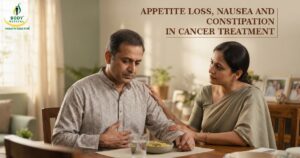
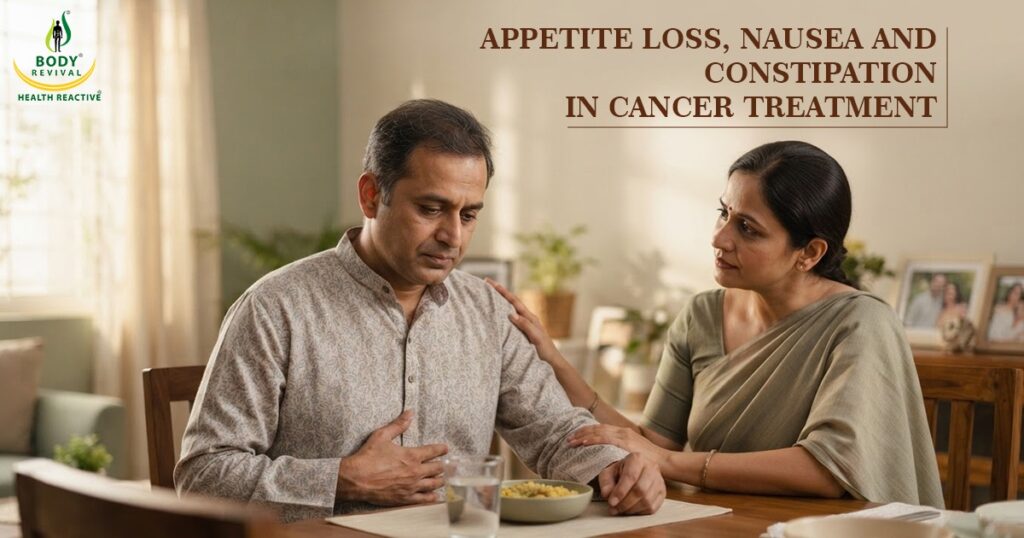
When cancer treatment makes you feel sick, takes away your appetite or leaves you constipated, even a simple meal can feel like a task. Families often say, “Just eat something,” and patients often feel guilty when they cannot. These are common side effects of treatment, not a lack of willpower, and most of them can be eased.
This guide explains why they happen, what Indian kitchens can do about each one, whether ginger or jeera water really helps, how gentle Ayurvedic support fits in, and when to call your doctor. It is general information and does not replace your oncologist’s advice.
Appetite Loss, Nausea and Constipation During Cancer Treatment:
- All three are common. Treatment, the cancer itself, medicines, pain and worry can each affect eating and digestion, often together.
- They feed each other. Nausea reduces appetite, eating less and moving less worsens constipation, and constipation can bring back nausea.
- Medicine comes first. Anti-nausea medicines work well when taken as your team directs. Home tips support them, and do not replace them.
- Small, frequent, simple meals work best. Five or six small meals are usually easier than three large ones.
- Report early. Tell your team about any change in eating, vomiting or bowel habits, because early treatment is easier.
Why Do I Feel Nauseous After Chemo?
The National Cancer Institute (NCI) explains that chemotherapy often causes nausea and vomiting, and that it may start within hours or be delayed. Doctors describe a few patterns:
- Acute: within 24 hours of treatment.
- Delayed: 1 to 7 days after treatment.
- Anticipatory: before a session, often triggered by the sights, smells or sounds of the treatment room.
- Breakthrough: nausea that appears despite taking anti-nausea medicine.
For chemotherapy, symptoms usually last 24 to 48 hours, although some people feel sick for up to 7 days. Radiation to the brain, upper abdomen or whole body, targeted therapy, immunotherapy, surgery and some pain medicines can also cause nausea. So can the cancer itself, anxiety, and taking some medicines on an empty stomach.
The important point is that anti-nausea medicines (antiemetics) work well to prevent and relieve nausea in people with cancer, and they are usually given before chemotherapy because symptoms are harder to treat once they start. Ask your doctor exactly when to take each one.
Why Does Cancer Treatment Cause Appetite Loss and Taste Changes?
Appetite loss rarely has a single cause. The NCI lists the cancer itself (especially cancers of the head and neck, lung, pancreas, liver or upper digestive tract), nausea and vomiting, diarrhoea or constipation, feeling full quickly, painful swallowing, mouth sores, dry mouth, taste changes, anxiety, pain, depression and fatigue.
Taste changes deserve a special mention. Chemotherapy, some medicines and head and neck radiation can make food taste metallic, bitter or bland, and meat may taste strange. For most people these changes are temporary, and they can vary from day to day.
Why Does Constipation Happen During Cancer Treatment?
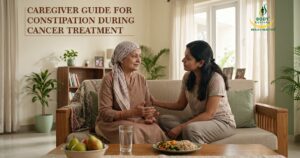
The NCI lists these causes:
- The cancer itself, if a tumour presses on or blocks the bowel or affects the nerves that control it.
- Chemotherapy, which can cause constipation.
- Medicines, including opioid pain medicines, anti-anxiety drugs, diuretics, and the anti-nausea medicines that help you feel better.
- Changes in lifestyle, such as less activity, less appetite and different eating habits.
Indian Home Tips for Appetite Loss During Cancer Treatment
Ask your dietitian before changing your diet. These ideas combine NCI guidance with everyday Indian foods.
Eat small, eat often, eat protein first
- Eat five or six small meals instead of three large ones, and set phone alarms if you forget.
- Eat soon after waking, and keep a light bedtime snack.
- Have the protein-rich part of the meal first, when your appetite is strongest: dal, curd, paneer, egg, fish or chicken if you eat them.
- Sip fluids between meals rather than during them, so you have room to eat.
Make every bite count
- Add a spoon of whole-milk curd, paneer, milk powder or a little ghee to khichdi, dal, dalia or upma. A little ghee suits many people, but cut back if greasy food triggers nausea.
- Try soft, filling dishes: moong dal khichdi, dal soup, besan or moong chilla, paneer bhurji, ragi porridge, vegetable upma and poha.
- If solid food is hard, try milk-based shakes, lassi, smoothies, soups, or dal water.
When nothing tastes right
The University of Iowa’s cancer education page and the NCI suggest these ideas:
- Choose bland foods such as rice, plain khichdi, mashed potato or idli, and eat food cold or at room temperature to reduce smell and taste.
- Try plastic or wooden spoons if everything tastes metallic.
- Use herbs and spices gently, and add a little sugar to soften bitter or salty tastes.
- Suck on a lemon wedge or mint candy for a bad aftertaste, and try fruits or foods you do not usually eat so you do not compare them with how they used to taste.
- Rinse your mouth and brush your teeth before meals to ease aftertaste.
A sample day of small Indian meals
| Time | Idea |
| On waking | Warm water or jeera water, and a few dates or a banana |
| Breakfast | Moong dal chilla or vegetable upma, with curd |
| Mid-morning | Milk shake, lassi, or a small bowl of fruit |
| Lunch | Soft dal, rice or roti, and a cooked vegetable such as lauki or bhindi |
| Afternoon | Roasted chana or a small paneer or egg snack |
| Evening | Dal soup or khichdi |
| Dinner | Light khichdi or dalia, with curd |
| Bedtime | Warm milk, or a few soaked almonds if chewing is easy |
This is only an example. Your dietitian can adjust it for diabetes, kidney problems, mouth sores or a veg or non-veg diet.
Indian Home Tips for Nausea After Chemotherapy

What to eat and drink
- Sip water, buttermilk (chaas), coconut water, weak tea or clear soups slowly through the day.
- Choose bland, starchy foods: rice, idli, plain khichdi, dry roti, poha or dalia.
- Cold foods such as curd, chaas, lassi, fruit and kulfi-style frozen treats often feel gentler than hot ones.
- Avoid greasy, fried, very sweet or very spicy food if these have upset you before.
Smells and surroundings
Strong smells such as coffee, fish, onions and garlic can trigger nausea. If cooking smells bother you, let someone else cook, ask the family to open windows, and eat cold or room-temperature food. Eat in a well-ventilated room, away from perfume and incense.
After eating
- Sit upright, or rest with your head raised, for about 30 minutes after a meal.
- Keep a simple diary of when nausea starts and what you ate or did before it, and share it with your team.
- Slow breathing, music, prayer or a short guided relaxation may help some people. Ask your doctor before trying acupressure.
Do Ginger or Jeera Water Help With Nausea?
Ginger
Ginger tea, or fresh ginger in food, is a common Indian choice, and the NCI lists ginger among foods and drinks that may help with nausea. The research is more mixed than many websites suggest. An oncology review of trials found mixed results, and the Oncology Nursing Society lists ginger for chemotherapy nausea under “effectiveness not established”. So ginger may help some people, but it is not a replacement for anti-nausea medicine.
Keep it simple and safe:
- A small amount of fresh ginger in tea or food is usually fine.
- Concentrated ginger supplements are different. Ginger can affect clotting in rare cases, so ask your oncologist first if you take blood thinners, have low platelets, or are on certain targeted drugs.
- Stop it and tell your team if it upsets your stomach.
Jeera (cumin) water
Jeera water is a traditional digestive drink in Indian homes. I could not find clinical studies on it for chemotherapy-related nausea, so there is no evidence that it prevents or treats nausea. As a warm, mild drink it may help you take in fluids, which matters, and many people find it soothing. Sip a small amount. If it upsets your stomach, stop. The same applies to saunf (fennel) water, ajwain water and lemon water: they are traditional, gentle drinks, but they are not proven treatments for chemo nausea.
Indian Home Tips for Constipation During Cancer Treatment

- Fluids: aim for about 8 cups (roughly 2 litres) of water or clear liquids a day unless your doctor limits fluids. Warm drinks, coffee or prune juice may help the bowel move.
- Movement: stay as active as you safely can. A short walk, light yoga or gentle movement in bed or a chair helps.
- Routine: eat and go to the toilet at the same times each day, and keep a record of your bowel movements for your team.
- Fibre, with care: the NCI advises asking your doctor before adding fibre, because for some people fibre and fibre supplements make constipation worse. This includes isabgol (psyllium).
- Laxatives: use only those your doctor recommends. Avoid suppositories and enemas unless prescribed.
- Herbal laxatives: products such as triphala churna or castor oil are used traditionally, but I found no studies of them in chemotherapy patients. Check with your oncologist first, especially if you have low blood counts, diarrhoea or a recent bowel operation.
When Should I Call the Doctor About Constipation?
Tell your team about any constipation so it can be treated early. Call sooner if you have:
- fewer than three bowel movements in a week
- severe belly pain, or vomiting
- signs of faecal impaction, which needs urgent attention: pressure in the rectum or a feeling that you cannot empty fully, back or belly pain, trouble passing urine, a fast heartbeat, confusion, dizziness, sudden watery stool or leaking stool, nausea or dehydration
Gentle Ayurvedic-Style Support for Appetite, Nausea and Digestion
Gentle habits that suit most people
These are traditional ideas that are generally compatible with medical treatment when your doctor agrees:
- warm, freshly cooked, easy-to-digest meals
- fixed meal and sleep times
- light movement and slow breathing
- a calm place to eat, without hurry
What does the research say about Ayurvedic herbs?
It is limited. A 2025 ASCO Post review reports small studies in which Ayurvedic herbs were associated with improvement in nausea, fatigue, appetite and quality of life. One 36-patient study of an Ayurvedic formulation reported fewer side effects such as vomiting. The same review states that large, well-designed trials are still needed, and that standardising herbal products is a challenge.
Safety rules for any herbal product during cancer treatment
- Tell your oncologist before you start, and bring the label and ingredient list. The NCI warns that some supplements and alternative therapies may cause cancer treatments to work less well.
- Never stop, skip or delay treatment, including anti-nausea medicine, because you are using a home remedy or a herb.
- Avoid unlabelled powders, “bhasma” and products without a clear manufacturer and batch number.
- Do not start several products at once. If something goes wrong, you cannot tell which one caused it.
- Report new symptoms such as rash, yellowing of the eyes, dark urine or vomiting.
Body Revival: Ayurvedic Supportive Care Alongside Cancer Treatment

Body Revival is an Ayurvedic formulation developed with a focus on supportive cancer care. It is intended to support patients as part of their overall cancer-care journey and can be considered alongside the medical treatment recommended by their healthcare professionals. It is a supplement, not chemotherapy or any other cancer treatment, and it does not replace medical treatment.
What did the Body Revival clinical trial look at?
Body Revival has been evaluated in a clinical trial in breast cancer patients, registered with the Clinical Trials Registry of India (CTRI-ICMR) under CTRI/2023/11/059465. The trial assessed quality of life, performance status, chemotherapy- and radiation-related side effects, appetite, stamina, nausea, constipation, muscle weakness, dizziness, fatigue, liver enzyme levels, and blood protein and haemoglobin counts. The reported findings included:
- better physical and psychological well-being
- improved daily functioning and energy
- fewer treatment-related side effects
- increased appetite, stamina and endurance, with reductions in nausea, constipation, muscle weakness, dizziness and fatigue
- lower liver enzyme levels and improved blood protein and haemoglobin counts
These results come from one trial in a specific group of breast cancer patients in India. They do not show that Body Revival treats or cures cancer, and individual results vary. Registration with CTRI is a record of the trial, not an approval.
Using Body Revival safely during treatment
- Tell your oncologist and your Ayurvedic practitioner before you start.
- Do not use it as a reason to skip anti-nausea medicine, laxatives or any prescribed treatment.
- Follow the label directions.
- Report any new symptoms to your team early.
When to Call Your Doctor About Nausea, Vomiting or Poor Appetite
The NCI notes that uncontrolled vomiting can cause dehydration, electrolyte imbalance and weight loss, and that dizziness, weakness and confusion are signs of dehydration. Ask your team in advance which symptoms they want to hear about, how much fluid you should drink each day, and what to do if you vomit. In general, call promptly if you:
- cannot keep fluids down, or vomiting continues despite your anti-nausea medicine
- feel dizzy, weak or confused, or pass very little urine
- start losing weight, or lose more than about 1.5 to 2 kg in a week (the NCI says to report loss of more than 3 to 5 pounds in a week)
- cannot eat or drink at all
- have belly pain, a swollen belly, or no bowel movement along with vomiting
- have fever or chills during chemotherapy
How Families Can Help With Eating Problems
- Do not force food or comment on how much is left on the plate. Offer small portions often.
- Let someone else cook if smells upset the patient, and serve food cold or at room temperature.
- Keep fluids, snacks and a medicine chart within reach, and help the patient take anti-nausea medicine on time.
- Keep the diary of meals, nausea and bowel movements, and bring it to appointments.
- Make meals relaxed, with company if the patient likes it.
- Look after your own rest and health too. Caregivers need support.
Final Takeaway: Managing Appetite Loss, Nausea and Constipation
Appetite loss, nausea and constipation are real, common and usually manageable. Take your anti-nausea medicine as your team directs, eat small and often, choose simple Indian foods you can tolerate, keep fluids and gentle movement going, and report problems early. Ginger and jeera water can be comforting, but they do not replace medicine. Supportive Ayurvedic medicine can sit alongside medical treatment, with your doctor’s knowledge, but never in place of it.
Frequently Asked Questions (FAQ)
Why do I feel nauseous after chemo?
Chemotherapy can trigger the brain’s vomiting centre and irritate the stomach, so nausea can start within hours or be delayed by a few days. It usually lasts 24 to 48 hours, though some people feel sick for up to a week. Anti-nausea medicines work well, so tell your team if you still feel sick.
What can I eat when nothing tastes right?
Try bland foods such as plain khichdi, rice, idli or dalia, eaten cold or at room temperature. Use a plastic spoon for a metallic taste, add lemon or herbs, and have small meals often. Taste can change from day to day, so keep trying different foods.
Do ginger or jeera water help?
Ginger may help some people, but research is mixed, so it should not replace anti-nausea medicine. Jeera water has not been studied for chemo nausea, but as a mild warm drink it can help you take in fluids. Ask your oncologist before using ginger supplements.
Do I need to take anti-nausea medicine even when I feel fine?
Often yes. Anti-nausea medicine works best when taken before nausea starts, and it is usually given before chemotherapy. Follow your doctor’s schedule exactly, and tell them if you still feel sick.
Why does food taste metallic during chemo?
Chemotherapy and some medicines can change taste, and meat may taste metallic. It is usually temporary. Try plastic spoons, cold foods, lemon, herbs, and rinsing your mouth before eating.
What if I am losing weight because I cannot eat?
Tell your doctor early, and ask for a dietitian. Eat small protein-rich meals often, drink calories if solid food is hard, and keep nutrition drinks for between meals. The NCI says to report weight loss of more than 3 to 5 pounds in one week.
What should I do if I vomit, and when should I call the doctor?
Rest, sip small amounts of fluid, and follow your team’s instructions. Call promptly if you cannot keep fluids down, feel dizzy, weak or confused, pass little urine, or if vomiting continues despite your medicine.
Why do I get constipated during chemotherapy?
Chemotherapy, anti-nausea and pain medicines, less activity, less food and sometimes the cancer itself can slow the bowel. Report it early, because it is easier to treat before it becomes severe.
Which Indian home tips help with constipation?
Drink about 8 cups of fluids a day, take warm drinks, keep a regular meal routine and walk daily. Ask your doctor before adding fibre or taking any laxative, and avoid suppositories and enemas unless prescribed.
Can I take isabgol or triphala for constipation?
Ask your oncologist first. Fibre can make constipation worse for some people, and I found no studies of triphala in chemotherapy patients. Your doctor may suggest a safer laxative based on your blood counts and treatment.
When should I call the doctor about constipation?
Call if you have fewer than three bowel movements in a week, severe belly pain or vomiting. Seek urgent help for rectal pressure, trouble passing urine, a fast heartbeat, confusion, dizziness or sudden watery or leaking stool.
Can Ayurvedic medicine help nausea and appetite?
Some small studies suggest benefit, but large trials are lacking. Use Ayurvedic products only with your oncologist’s agreement, and never in place of anti-nausea medicines or other treatment.
Is Body Revival a treatment for cancer?
No. It is an Ayurvedic supportive-care supplement meant to be used alongside the treatment your oncologist prescribes. It does not replace chemotherapy, radiotherapy, surgery or any other prescribed treatment.
What did the Body Revival trial show about appetite, nausea and constipation?
A CTRI-registered trial in breast cancer patients (CTRI/2023/11/059465) reported increased appetite, stamina and endurance, with reductions in nausea, constipation and fatigue. It studied one group of patients in India, and results may differ for others. It is not a cure claim.
Can I take Body Revival during chemotherapy?
Tell your oncologist and Ayurvedic practitioner first, share the label, and follow their guidance on timing alongside your other medicines.
Aksar Poochhe Jaane Wale Sawal (FAQs)
Yeh sawal-jawab Hinglish mein hain, taaki Hindi bolne waale marij aur unke parivaar aasani se samajh sakein. Yeh sirf jaankari ke liye hain. Aapke oncologist ki salaah hamesha sabse upar hai.
Chemo ke baad nausea kyun aata hai?
Chemotherapy se dimaag ka vomiting centre aur pet prabhavit ho sakta hai, isliye nausea kuch ghanton mein ya kuch din baad shuru ho sakta hai. Yeh aam taur par 24 se 48 ghante rehta hai, par kuch logon mein ek hafte tak. Anti-nausea dawaiyan achhi tarah kaam karti hain, isliye abhi bhi mitli aaye to team ko batayein.
Jab kuch bhi swaad na lage to kya khayein?
Saada khichdi, chawal, idli ya dalia jaise halke khaane thande ya room temperature par khayein. Metal jaisa swaad aaye to plastic ka chammach lein, nimbu ya herbs milayein, aur thoda-thoda baar-baar khayein. Swaad din-ba-din badalta hai, isliye alag-alag cheezein aazmate rahein.
Kya adrak ya jeera pani madad karta hai?
Adrak kuch logon ko madad kar sakta hai, par research mili-juli hai, isliye yeh anti-nausea dawa ki jagah nahi le sakta. Jeera pani par chemo ke nausea ke liye koi study nahi mili, par ek halka garam drink hone ke naate yeh paani peene mein madad kar sakta hai. Adrak ke supplement lene se pehle apne oncologist se poochhein.
Kya mujhe thik mehsoos karne par bhi anti-nausea dawa leni chahiye?
Aksar haan. Anti-nausea dawa tab sabse achha kaam karti hai jab nausea shuru hone se pehle li jaaye, aur yeh aam taur par chemotherapy se pehle di jaati hai. Apne doctor ka bataya hua schedule ekdam waisa hi follow karein, aur agar phir bhi mitli aaye to unhe batayein.
Chemo mein khane ka swaad dhaatu jaisa kyun lagta hai?
Chemotherapy aur kuch dawaiyan swaad badal sakti hain, aur maans ka swaad dhaatu jaisa lag sakta hai. Yeh aam taur par asthayi hota hai. Plastic ke chammach, thanda khana, nimbu, herbs aur khane se pehle kulla karna aazmayein.
Agar main kha nahi paa raha/rahi aur vajan kam ho raha hai to kya karein?
Doctor ko jaldi batayein, aur dietitian ke liye kahein. Thoda-thoda protein waala khana baar-baar khayein, thos khana mushkil ho to calories waale drinks lein, aur nutrition drinks khane ke beech mein lein. NCI ke anusaar ek hafte mein 3 se 5 pound (lagbhag 1.5 se 2 kg) se zyada vajan kam ho to batana chahiye.
Ulti ho jaaye to kya karein, aur doctor ko kab call karein?
Aaram karein, thoda-thoda paani ghoont-ghoont karke piyein, aur apni team ki hidayat maanein. Agar paani bhi nahi tik raha, chakkar ya kamzori ya confusion ho, peshaab bahut kam aa raha ho, ya dawa ke baad bhi ulti jaari ho, to turant call karein.
Chemo ke dauran kabz kyun hota hai?
Chemotherapy, anti-nausea aur dard ki dawaiyan, kam activity, kam khana aur kabhi-kabhi cancer khud bhi aant ko dheema kar sakte hain. Ise jaldi batayein, kyunki gambhir hone se pehle ilaaj aasaan hota hai.
Kabz ke liye ghar par kaun se Indian tips madad karte hain?
Din mein lagbhag 8 cup paani ya clear fluids piyein, garam drinks lein, khane ka routine rakhein aur roz tehlein. Fibre badhane ya laxative lene se pehle doctor se poochhein, aur suppositories ya enema doctor ke bina na lein.
Kya kabz ke liye isabgol ya triphala le sakte hain?
Pehle oncologist se poochhein. Kuch logon mein fibre kabz ko aur badha deta hai, aur chemo ke marijon mein triphala par koi study mujhe nahi mili. Doctor aapke blood counts aur treatment ke hisaab se zyada surakshit laxative suggest kar sakte hain.
Kabz mein doctor ko kab bulayein?
Ek hafte mein teen se kam baar potty ho, pet mein tez dard ho ya ulti ho to call karein. Rectum mein dabav, peshaab karne mein dikkat, tez dhadkan, confusion, chakkar ya achanak patla ya leak hone waala stool ho to turant madad lein.
Kya Ayurvedic dawa nausea aur bhookh mein madad kar sakti hai?
Kuch chhote studies mein fayda dikha hai, par bade trials ki kami hai. Ayurvedic products sirf apne oncologist ki sahmati se lein, aur anti-nausea dawaiyon ya kisi bhi ilaaj ki jagah kabhi na lein.
Kya Body Revival cancer ka ilaaj hai?
Nahi. Yeh ek Ayurvedic supportive-care supplement hai, jo aapke oncologist dwara bataye gaye treatment ke saath istemaal ke liye hai. Yeh chemotherapy, radiotherapy, surgery ya kisi bhi prescribed treatment ki jagah nahi leta.
Bhookh, nausea aur kabz par Body Revival ka trial kya dikhata hai?
Breast cancer ke marijon par CTRI mein registered ek trial (CTRI/2023/11/059465) mein bhookh, stamina aur endurance mein badhotri, aur nausea, kabz aur thakaan mein kami report ki gayi. Yeh Bharat ke ek khaas samooh par kiya gaya tha, aur doosron par natije alag ho sakte hain. Yeh cure ka daava nahi hai.
Kya chemo ke dauran Body Revival le sakte hain?
Pehle apne oncologist aur Ayurvedic vaidya ko batayein, label dikhayein, aur apni doosri dawaiyon ke saath iska samay unse poochhkar tay karein.
Important medical disclaimer: This article is for educational and informational purposes only. It is not a substitute for diagnosis, medical advice or treatment from a qualified healthcare professional. Do not start, stop, delay or change any cancer treatment or medicine without advice from your treating oncology team. Body Revival is a supportive-care supplement and is not a treatment or cure for cancer.
References
- National Cancer Institute: Nausea and Vomiting (PDQ) and Nausea and Vomiting Appetite Loss and Constipation
- University of Iowa Hospitals and Clinics: Taste changes during cancer treatment
- CancerNetwork: Ginger for Preventing Chemo-Induced Nausea: What Is the Evidence?
- Oncology Nursing Society: Ginger (Oral Intake) for Chemotherapy-Induced Nausea and Vomiting
- The ASCO Post: Ayurveda in Cancer Care
- Manipal Cigna: Chemotherapy Recovery Diet
- Body Revival: Clinical trial page