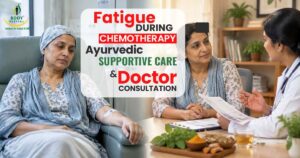
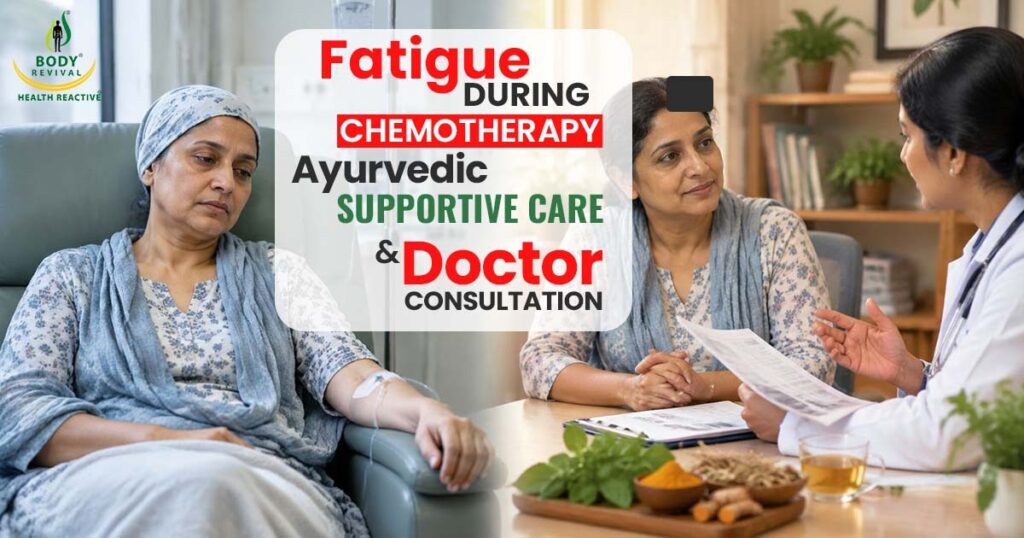
Feeling tired after chemotherapy is one of the most common experiences in cancer care, and one of the least talked about. Patients often say, “I’m not doing anything, so why am I this exhausted?” Families often worry that tiredness means the treatment is failing, or that the patient is simply not trying hard enough. Neither is true.
This guide explains why chemotherapy causes fatigue, what else can make it worse (including low haemoglobin, poor appetite, nausea and constipation), what practical steps help, how gentle Ayurvedic-style support fits in, and when tiredness is a reason to call your doctor. It is general information and does not replace your oncologist’s advice.
Is Tiredness Normal During Chemotherapy? The Short Answer
- Yes, it is very common. The US National Cancer Institute (NCI) says more than 80% of people with cancer have fatigue during chemotherapy or radiation therapy.
- It is different from ordinary tiredness. Cancer fatigue is not fully relieved by sleep or rest, can appear after little or no activity, and can affect thinking, memory and concentration.
- It can last. Fatigue after chemotherapy may continue for a month or more after treatment ends, and for some people it lasts months or years.
- Something can often be done. Part of the cause may be treatable, such as anaemia, poor nutrition, pain, poor sleep or low mood.
- Always report it. Fatigue is a symptom your oncologist wants to hear about, not something to hide.
What Is Cancer-Related Fatigue and How Is It Different From Normal Tiredness?
Normal tiredness follows activity and improves with rest. Cancer-related fatigue is a deeper exhaustion caused by the cancer, its treatment, or both. People describe it as heavy limbs, a “drained” feeling, trouble finding words, or not having the energy to wash, cook or walk to the next room.
Because it is so personal, doctors often ask patients to rate it and to keep a simple fatigue diary: your energy on a scale of 0 to 10 each day, what you did, how you slept and what you ate. Bringing this diary to appointments helps your team find patterns.
Causes of Fatigue During Chemotherapy
Fatigue rarely has one cause. The NCI lists several that often overlap:
Anaemia (low haemoglobin)
Chemotherapy and radiation can lower red blood cells, and so lower the oxygen reaching your tissues. Anaemia can cause tiredness, breathlessness, light-headedness, dizziness, headaches, a fast heartbeat and pale skin. Of all the causes, this is one of the most treatable, which is why blood tests matter.
Poor appetite, nausea, vomiting and diarrhoea
When you eat less, you get less energy from food. Vomiting and diarrhoea can also cause dehydration, which adds to weakness.
Poor sleep and pain
Pain, night sweats, medicines and long daytime naps can all disturb sleep. Pain itself is tiring, and some pain medicines add to drowsiness.
The treatment itself
Chemotherapy, radiation, hormone therapy, immunotherapy and targeted therapy can all cause fatigue, and combinations can add up. Hormone changes in breast and prostate cancer can contribute too.
Stress, anxiety and low mood
Worry, fear and depression drain energy and disturb sleep and appetite. This is common, not a weakness, and it is treatable.
The cancer itself
Some cancers, including blood cancers and cancers of the digestive system, are more strongly linked to fatigue.
Low Haemoglobin and Weakness During Chemotherapy: What Families Should Know
Low haemoglobin (Hb) is one of the first things to check when a patient says, “I have no strength.”
How do you know if low Hb is the cause?
Only a blood test can tell. Signs that suggest anaemia include pale skin, breathlessness on small effort, dizziness on standing, a racing heart and headaches. Report them to the care team rather than guessing.
How low is too low?
There is no single number that applies to everyone. As one example, a UK hospital (NHS) oncology guideline defines anaemia as Hb of 13 g/dL or below for men and 11 g/dL or below for women, and treats Hb of 10 g/dL or below as clinically significant. It suggests considering a blood transfusion if Hb falls below 7 g/dL (or below 8 g/dL if the patient has significant heart disease), with decisions between 7 and 8 g/dL depending on symptoms. Your hospital’s rules may differ.
When is a blood transfusion needed?
A transfusion is usually considered when Hb is very low or when symptoms are significant. Doctors also weigh heart conditions, how fast the Hb is falling and where you are in treatment. Do not refuse or ask for a transfusion on the basis of a number alone. Ask your oncologist what the plan is.
Can food raise haemoglobin?
Food helps, but it may not be enough on its own, so please do not rely on diet instead of a blood test and a doctor’s plan. The same NHS guideline notes that iron tablets are often ineffective in cancer patients and that intravenous iron is preferred when iron deficiency is confirmed.
Iron-rich and supportive Indian foods your dietitian may suggest include dal, rajma, chole and roasted chana; spinach and amaranth (chaulai); ragi and bajra; and eggs, curd and paneer if you eat them. Vitamin C fruits such as orange and guava taken alongside iron-rich meals are said to help iron absorption. If your care team has asked you to eat only freshly cooked food or avoid raw items during low blood counts, follow that advice.
How can families help?
- Watch for dizziness, fainting and breathlessness, and help the patient stand up slowly.
- Keep a list of blood-test dates and results.
- Prepare small, protein-rich meals and keep fluids within reach.
- Take over heavy chores so the patient’s energy goes where it matters.
Appetite Loss, Nausea and Constipation in Cancer Treatment: Indian Home Tips
Eating well is hard when nothing tastes right, and not eating makes fatigue worse. These ideas are based on NCI guidance, adapted to Indian kitchens. Ask your dietitian before changing your diet.
What can I eat when nothing tastes right?
- Eat small meals often. Five or six small meals are easier than three large ones. Eat soon after waking and keep a bedtime snack.
- Put protein first. Eat the protein-rich part of the meal when your appetite is strongest.
- Try soft, bland foods. Plain khichdi, moong dal soup, dalia, curd rice, idli, plain roti and rice are often better tolerated than rich or heavily spiced food.
- Use cold or room-temperature food if cooking smells make you feel sick. Curd, buttermilk (chaas), lassi and chilled fruit are often easier.
- Choose drinks with calories if solid food is hard: milk-based shakes, smoothies, soups and dal water.
Nausea: simple steps that may help
- Sip fluids slowly through the day.
- Avoid greasy, fried, very sweet or very spicy food if these have upset you before.
- Skip strong smells such as fish, onions, garlic and coffee while nauseous, and eat in a well-aired room.
- Rest upright, or with your head raised, for about 30 minutes after eating.
- Note when nausea happens and what you ate before it, and share this with your team.
Are khichdi, soups and ginger good choices?
Yes, for most people. Khichdi and dal soups are easy to digest and give protein and carbohydrate in a small bowl. The NCI notes that ginger tea may ease nausea, and a 2025 ASCO Post review describes ginger as a safe adjuvant for chemotherapy-related nausea and vomiting. Use ginger as food or tea, and tell your oncologist before taking ginger supplements.
Constipation during chemotherapy
- Aim for about 8 cups (roughly 2 litres) of water or clear fluids a day unless your doctor limits fluids.
- Keep a regular meal routine and move gently every day: a short walk, light yoga or movements in bed or a chair.
- Ask your doctor before adding fibre, because for some people more fibre makes constipation worse.
- Use only laxatives your doctor recommends. Avoid suppositories and enemas unless prescribed.
- Tell your team about any constipation, and call if you have fewer than three bowel movements in a week, severe belly pain or vomiting.
Foods and habits to be careful with
Street food, raw or undercooked eggs and dairy, and very oily or heavily spiced food can upset the stomach or carry infection risk during treatment. Cook food fresh, wash vegetables and fruit well, and follow any food-safety rules your team has given you.
How to Manage Fatigue During Chemotherapy: Practical Steps That Help
Save your energy
Do your most important tasks when you feel strongest, drop what is not essential, and accept help. Planning the day around two or three priorities is more effective than trying to push through everything.
Move a little, every day
Gentle activity, including walking, may improve energy during and after treatment. Start small, stop if you feel dizzy or breathless, and ask your care team what is right for you.
Protect your sleep
Keep regular sleep and wake times. Keep daytime naps under an hour so night sleep is not disturbed. If sleep problems continue, tell your doctor.
Try yoga and breathing practices
The NCI notes that yoga, tai chi and qigong have been found to reduce fatigue. Gentle yoga and slow breathing (pranayama) are widely used in India. Choose a gentle style, avoid straining or breath-holding, and check with your doctor first, especially if you have low Hb, low platelets, bone involvement or recent surgery.
Look after your mind
Counselling, including cognitive behavioural therapy, and talking with other patients can reduce stress and anxiety that worsen fatigue. If you feel persistently low, ask your doctor, because treating depression can also help energy.
What about medicines for fatigue?
The NCI states there is no standard drug treatment for cancer fatigue, so the main steps are treating the causes (such as anaemia or pain) and the self-care measures above. Do not start stimulants or herbal “energy boosters” without your oncologist’s advice.
Ayurvedic Supportive Care for Cancer Fatigue: What to Know
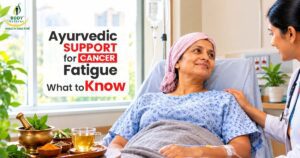
What does Ayurveda mean by rasayana?
In Ayurveda, rasayana refers to a group of rejuvenating approaches, including diet, lifestyle practices and herbal formulations, traditionally used to support strength, stamina and vitality. In a cancer-care setting, it makes sense to think of this as supportive care, meant to help you cope with treatment, and never as a substitute for it.
Gentle, low-risk Ayurvedic-style habits
These are traditional lifestyle ideas that are generally compatible with medical treatment when your doctor agrees:
- warm, freshly cooked, easy-to-digest meals
- a regular daily routine with fixed meal and sleep times
- gentle movement and breathing practices
- calm time for prayer, music or quiet
What does the research say about Ayurvedic herbs?
Honestly, it is limited. A 2025 ASCO Post review of Ayurveda in cancer care reports small studies suggesting benefits for symptoms such as nausea, fatigue and appetite, and states that large, well-designed trials are still needed. It also highlights challenges in standardising herbal products.
Ashwagandha, a herb often linked to stamina, shows how careful you need to be. The ASCO Post and Memorial Sloan Kettering (MSK) describe one open-label study of 100 breast cancer patients on chemotherapy that reported less chemotherapy-related fatigue, and both say larger trials are needed. Reported cautions include drowsiness, stomach upset, rare liver injury and thyroid problems, possible additive effects with sedatives, and avoidance in hormone-sensitive prostate cancer. The NCI also notes that coenzyme Q10 and L-carnitine have not been shown to reduce cancer fatigue.
Safety rules for any Ayurvedic or herbal product during chemotherapy
- Tell your oncologist before you start, and bring the label and ingredient list.
- Never stop, skip or delay chemotherapy because you are taking an herbal product.
- Avoid unlabelled “powders”, “bhasma” or products without a clear manufacturer and batch number. MSK has reported hemolytic anaemia from a herbal product contaminated with lead.
- Do not combine several herbal products at once. If something goes wrong, it will be hard to tell which one caused it.
- Ask for blood tests such as liver function if your doctor advises monitoring.
- Report new symptoms such as nausea, rash, yellowing of the eyes, dark urine or unusual sleepiness.
Body Revival: Ayurvedic Supportive Care Alongside Cancer Treatment
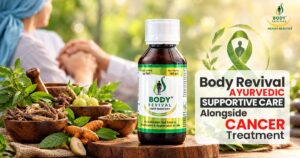
Body Revival is an Ayurvedic formulation developed with a focus on supportive cancer care. It is intended to support patients as part of their overall cancer-care journey and can be considered alongside the medical treatment recommended by their healthcare professionals.
What did the Body Revival clinical trial look at?
Body Revival has been evaluated in a clinical trial in breast cancer patients, registered with the Clinical Trials Registry of India (CTRI-ICMR) under CTRI/2023/11/059465. The trial assessed quality of life, performance status, chemotherapy- and radiation-related side effects, appetite, stamina, nausea, constipation, muscle weakness, dizziness, fatigue, liver enzyme levels, and blood protein and haemoglobin counts. The reported findings included:
- better physical and psychological well-being
- improved daily functioning and energy
- fewer treatment-related side effects
- increased appetite, stamina and endurance, with reductions in nausea, constipation, muscle weakness, dizziness and fatigue
- lower liver enzyme levels and improved blood protein and haemoglobin counts
These results come from trial in a specific group of breast cancer patients in India, individual results vary.
Using Body Revival safely during chemotherapy
- Ask oncologist or ayurvedic practitioner before you start.
- Do not use it as a reason to skip, delay or stop any medical treatment, or to avoid a blood test or transfusion your doctor advises.
- Follow the label directions.
- Report any new symptoms to your team early.
When to Call Your Doctor About Fatigue
Tell your care team if you feel very weak and tired, especially if you cannot do your usual activities or you are still exhausted after resting or sleeping. Call sooner, or seek urgent care, if you have:
- breathlessness, a racing heart, fainting or severe dizziness
- confusion, or dizziness with very little urine (signs of dehydration)
- persistent vomiting or diarrhoea
- fever or chills during chemotherapy
- weight loss of more than about 1.5 to 2 kg in a week, or inability to eat or drink
- fewer than three bowel movements in a week, or severe belly pain with vomiting
- yellowing of the eyes or skin, or very dark urine
- chest pain, or fatigue that suddenly gets much worse
Ask your healthcare team which symptoms they want to hear about, and keep their number on your phone.
How Families and Caregivers Can Help a Patient With Chemo Fatigue
- Do not tell a tired patient to “try harder” or “be positive”. Fatigue is a medical symptom.
- Take over household tasks and keep meals small, frequent and easy.
- Help with the fatigue diary, appointments and blood-test dates.
- Encourage a short walk or gentle stretch when the patient feels up to it.
- Keep visitors short and plan rest after treatment days.
- Look after your own rest and health too. Caregivers need support.
Frequently Asked Questions About Chemotherapy Fatigue
Is it normal to feel so tired during chemotherapy?
Yes. More than 80% of people having chemotherapy or radiation report fatigue. It is not a sign that you are weak or that treatment is failing. Do tell your doctor, because some causes, such as anaemia, can be treated.
How long does fatigue last after chemotherapy?
It varies. Fatigue may continue for a month or more after treatment ends, and for some people it lasts for months or even years. If it is not improving, ask your doctor to look for treatable causes.
Will rest and sleep fix it?
Not completely. Cancer fatigue is not fully relieved by rest. A balance of short rests, gentle activity, good sleep habits and good nutrition works better than staying in bed.
Should I exercise when I feel this tired?
Gentle activity such as walking may improve energy, but it should be light and agreed with your care team. Stop if you feel dizzy, breathless or unwell.
Can low haemoglobin cause fatigue?
Yes. Anaemia means less oxygen reaches your tissues, which can cause tiredness, breathlessness and dizziness. A blood test will confirm it.
How can I improve haemoglobin with food?
Iron-rich foods such as dal, rajma, chole, roasted chana, spinach, amaranth, ragi and bajra, plus vitamin C fruits, can support a healthy diet. But food alone may not correct a low Hb during chemotherapy, so ask your oncologist whether you need iron treatment or other measures.
What can I eat when nothing tastes right?
Try small, frequent meals; protein first; plain khichdi, dal soup, curd rice, dalia, idli or soft rotis; cold or room-temperature food; and drinks with calories such as milk-based shakes. Ginger tea may ease nausea.
Is ginger safe during chemotherapy?
Ginger as food or tea is generally considered safe, and the NCI notes it may ease nausea. Tell your oncologist before using ginger supplements or concentrated extracts.
Which Indian home tips help with constipation?
Fluids (about 8 cups a day), a regular meal routine, gentle daily movement and warm drinks may help. Check with your doctor before adding fibre or taking any laxative.
Can I take Ashwagandha or other rasayana herbs during chemotherapy?
Only after your oncologist agrees. The evidence is limited and reported cautions include drowsiness, liver and thyroid effects, and interactions with sedatives. Never take a herbal product instead of treatment.
Can yoga and pranayama help fatigue?
The NCI notes yoga has been found to reduce fatigue. Choose gentle practices, avoid strain and breath-holding, and check with your doctor first.
Is Body Revival a treatment for cancer?
No. It is an Ayurvedic supportive-care supplement meant to be used alongside the treatment your oncologist prescribes. It does not replace chemotherapy, radiotherapy, surgery or any other prescribed treatment.
What did the Body Revival trial show about fatigue?
A CTRI-registered trial in breast cancer patients (CTRI/2023/11/059465) reported improvements in quality of life, energy, appetite and stamina, with reductions in fatigue, nausea and constipation. It studied a group of breast cancer patients in India, and results may differ for others.
Can I take Body Revival during chemotherapy?
Tell your oncologist and Ayurvedic practitioner first, share the label, and follow their guidance on timing alongside your other medicines.
When should I call my doctor about tiredness?
If you feel very weak, cannot do normal activities, or are still exhausted after rest, or if you have breathlessness, fainting, dehydration, fever or rapid weight loss. Do not wait for your next appointment.
Chemo ke dauran itni thakaan hona normal hai kya?
Haan, yeh bahut common hai. Chemotherapy ya radiation le rahe 80% se zyada marijon ko thakaan hoti hai. Iska matlab yeh nahi ki aap kamzor hain ya treatment kaam nahi kar raha. Apne doctor ko zaroor batayein, kyunki thakaan ke kuch kaaran, jaise anaemia, ka ilaaj ho sakta hai.
Chemo ke baad thakaan kitne din tak rehti hai?
Yeh har insaan mein alag hoti hai. Treatment khatam hone ke baad bhi thakaan ek mahine ya usse zyada tak reh sakti hai, aur kuch logon mein mahinon ya saalon tak. Agar sudhar nahi ho raha, to doctor se kahein ki woh ilaaj ke laayak kaaranon ki jaanch karein.
Kya aaram aur neend se thakaan theek ho jaati hai?
Poori tarah nahi. Cancer ki thakaan sirf aaram karne se poori tarah door nahi hoti. Chhote-chhote aaram, halki activity, achhi neend ki aadatein aur sahi poshan ek saath zyada madad karte hain. Din bhar bistar par pade rehne se faayda nahi hota.
Itni thakaan mein kya exercise karni chahiye?
Halki activity, jaise tehalna, energy badhane mein madad kar sakti hai, par yeh halki honi chahiye aur aapki care team ki salaah se honi chahiye. Chakkar aaye, saans phoole ya tabiyat kharab lage to ruk jaayein.
Kya low hemoglobin se thakaan hoti hai?
Haan. Anaemia ka matlab hai ki sharir ke tissues tak kam oxygen pahunchti hai, jisse thakaan, saans phoolna aur chakkar aa sakte hain. Blood test se iski pushti hoti hai.
Khane se hemoglobin kaise badhayein?
Dal, rajma, chole, bhuna chana, palak, chaulai, ragi, bajra aur vitamin C waale fal jaise santra aur amrood ek sehatmand diet ka hissa ho sakte hain. Lekin chemo ke dauran sirf khane se Hb theek na ho, aisa ho sakta hai. Isliye apne oncologist se poochhein ki aapko iron ka ilaaj ya koi aur upay chahiye ya nahi.
Jab kuch bhi swaad na lage to kya khayein?
Thoda-thoda aur baar-baar khayein. Pehle protein waali cheez khayein. Saada khichdi, dal ka soup, curd rice, dalia, idli ya naram roti lein. Thanda ya room temperature ka khana lein, aur calories waale drinks jaise doodh ke shake piyein. Adrak ki chai se nausea mein aaram mil sakta hai.
Kya chemo mein adrak lena safe hai?
Khane ya chai ke roop mein adrak aam taur par safe maana jaata hai, aur NCI ke anusaar isse nausea mein aaram mil sakta hai. Adrak ke supplement ya concentrated extract lene se pehle apne oncologist ko batayein.
Kabz ke liye ghar par kaun se tips madad karte hain?
Din bhar mein lagbhag 8 cup paani, khane ka fixed routine, roz halki chahal-kadmi aur garam drinks madad kar sakte hain. Fibre badhane ya koi laxative lene se pehle doctor se poochhein.
Kya chemo ke dauran Ashwagandha ya dusri rasayana jadi-bootiyan le sakte hain?
Oncologist se salah le. Pramaan seemit hain, aur reported savdhaniyon mein neend ya sust-pan, liver aur thyroid par asar, aur sedative dawaiyon ke saath interaction shaamil hain. Jadi-booti ko kabhi bhi ilaaj ki jagah na lein.
Kya yoga aur pranayama se thakaan mein madad milti hai?
NCI ke anusaar yoga se thakaan kam hone ki baat saamne aayi hai. Halke abhyaas chunein, zor lagane aur saans rokne se bachein, aur shuru karne se pehle apne doctor se poochh lein.
Kya Body Revival cancer ka ilaaj hai?
Nahi. Yeh ek Ayurvedic supportive-care supplement hai, jo aapke oncologist dwara bataye gaye treatment ke saath istemaal ke liye hai. Yeh chemotherapy, radiotherapy, surgery ya kisi bhi prescribed treatment ki jagah nahi leta.
Thakaan ke baare mein Body Revival ka trial kya dikhata hai?
Breast cancer ke marijon par CTRI mein registered ek trial (CTRI/2023/11/059465) mein quality of life, energy, bhookh aur stamina mein sudhar, aur thakaan, nausea aur kabz mein kami report ki gayi. Yeh Bharat (India) me ek samooh (group) par kiya gaya clinical trial h, aur doosron par natije alag ho sakte hain.
Kya chemo ke dauran Body Revival le sakte hain?
Pehle apne oncologist aur Ayurvedic vaidya ko batayein, label dikhayein, aur apni doosri dawaiyon ke saath iska samay unse poochhkar tay karein.
Thakaan ke baare mein doctor ko kab call karna chahiye?
Jab aap bahut kamzor ho jaayein, rozmarra ke kaam na kar paayein, ya aaram ke baad bhi bahut thake rahein. Saans phoolna, behoshi, dehydration, bukhar ya tezi se vajan kam hone par bhi turant call karein. Agle appointment ka intezaar na karein.
Final Takeaway: Managing Fatigue and Weakness During Chemotherapy
Fatigue during chemotherapy is real, common and often partly treatable. Check for causes such as low haemoglobin, poor nutrition, pain, poor sleep and low mood. Eat small, frequent meals with Indian foods you can tolerate, move gently, protect your sleep and save your energy. Supportive Ayurvedic-style care can sit alongside medical treatment, with your doctor’s knowledge, but never in place of it.
References
- National Cancer Institute: Fatigue and Cancer and Fatigue (PDQ) Anemia Appetite Loss, Nausea and Vomiting and Constipation
- Gloucestershire Hospitals NHS Foundation Trust: Anaemia and Iron Deficiency in Oncology Patients
- Memorial Sloan Kettering Cancer Center: Ashwagandha
- The ASCO Post: Ashwagandha and Ayurveda in Cancer Care
- Manipal Cigna: Chemotherapy Recovery Diet
- Body Revival: Clinical trial page
Disclaimer: This article is for educational and informational purposes only. Body Revival is a supportive-care supplement and is not a treatment or cure for cancer. It is not a substitute for diagnosis, medical advice or treatment from a qualified healthcare professional.